Lineage after Rupture: Learning Herbalism in a Broken Ecology

By Maureen (Mo) Judith


We live in the afterlife of laws signed into power by monarchs with political agendas of expansion. Many laws were passed that criminalized animistic practices and severed people from the more-than-human world. Though this history can feel distant to some, the impact remains embedded in many parts of life, and certainly in contemporary western herbalism. Across the continents, relationship to land, sea and plants was not simply forgotten, it was actively suppressed and punished for generations. Knowledge was outlawed unless coming from defined institutions. Access to place was restricted by race and sex. Memory was severed through cultural genocide and replaced with conversion schooling and policy. While colonial expectation and narration replaced kinship with separation.

The plants endured as they so cleverly do. Plantain leaf continued to grow along the compacted paths and roadsides and the dandelions returned each spring to broken soil. They continued on without forgetting who they were in the necessity of compromise and adapting to a world becoming overrun by humans. Something was splintered though, it was their stories that once taught us how to listen. We came to recognize a plant by its name or use, but no longer by its presence. Without those recognitions, resilience can be misconstrued as availability in a society that tells us the world was built for us alone.

In this fractured landscape, lineage in herbal education is often misunderstood as a credential or at times ties to a blood line, something one either possesses or lacks. In North America especially, the language of being ‘self-taught’ has become common in herbal spaces. Celebrated as independence or exceptional smarts and claimed out of perceived necessity, yet the fact remains that no one learns anything, truly alone. Although one can certainly be self directed in an autonomous process seeking knowledge. However, nothing grows in isolation, this fundamental fact of life is also true of wisdom and knowledge. Even when physically present human teachers are absent, Nettle for example, teaches through proximity and consequence. Through sting and relief, asking one to slow down and demanding attention and perseverance.

Or learning that is shaped by beloved books that sit crooked on the shelf from the binding wearing out due to trusted reference, were written by others. Lineage then is not simply about who taught us, but about whether we recognize the web of relationships that make our learning possible and whether we accept the responsibility for how that learning is carried forward, and shared for the future. When lineage is reduced to personal authority rather than collective care, plant knowledge risks becoming extractive and exclusive. Untethered to history, consequence and reciprocity. We must ask: In the wake of this, what culture might this create?

The truth is many of us are navigating herbal education within highly individualistic cultures, but zooming out we can see that an herbalist stating that they are self-taught is a symptom of this exact rupture. Plants rarely model isolation. Even phytochemistry is a symphony of relationships between chemicals, alchemizing into their specific forms. The elder trees grow in clusters, or the yarrow spreads by rhizome. Even the most solitary looking tree is woven into networks of fungi, bacteria and insects beneath the soil. In this context, claiming to be self-taught is not defiance, but disconnection. This is not a personal failure, but the logical outcome of the wider rupture at play. Still, lineage persists. It may arrive in the groves of hawthorn trees as you stand under their canopy in awe as they steadied the nervous system. Or through a classroom that fostered careful thinking while the teachers goal was to help students organize their own thoughts to understand them more thoroughly. Or through the pages of a book, a labor of love written by another, that the student can still recall the scent of biblichor upon memory of summer.

Relationship after all, is how life on earth functions. Our world is shaped not only by competition of resources between species, but on a much larger scale, it is shaped with deep collaboration. The planetary feedback systems that sustain our planet, which we have named in modern day as the biogeochemical cycles (Carbon, Nitrogen, Sulfur, Phosphorus cycles) are in dialogue and response to community. The forests call the rain in-land towards themselves through the divine act of transpiration, in communication with large bodies of water far away. The whales significantly impact the glorious ocean currents regulating global temperatures and significantly impacting the lives of critters in the sea. Algae release dimethyl-sulfide which oxidizes once entering the on-going conversation within the atmosphere, eventually birthing the clouds that hang generously above. These exchanges are not symbolic; they are the material manifestations that sustain life. Cause and effect are braided together, each action shaping the conditions for what follows.

The carbon cycle offers one example of this intimacy. Carbon moves continually between the atmosphere, oceans, rock, and living bodies of beings. The linden leaves, for instance, breathe carbon in and transform it into sugar and oxygen, as well as their very own bodies. Or the oceans absorb carbon, buffering the atmosphere while nourishing countless forms of life exchanging in the sea. Over deep time these exchanges have kept Earth’s conditions within the narrow range that life can tolerate. But when this balance is disrupted, like by humans contributing to pollution, or by deforestation practices; the effects ripple outward. Altering waterways, weather systems and ecosystems. Earth does not remain inert though, Earth intensifies as a response. Hurricanes and storms for example are not random acts of violence, but a part of this dynamic planetary feedback process. Powerful winds will churn up the oceans drawing nutrient-rich waters upward stimulating plankton blooms at the surface of the sea that will absorb carbon out of the atmosphere. This is earth attempting regulation under strain, redistributing energy and matter in an effort to restore balance.

So we can see that Earth behaves as an aware-living system. Regulating itself through feedback, reciprocity, and communication; much like our own bodies do in the wake of imbalance. Indigenous science insists that this was always known, that rivers and mountains have agency and voice and are in conversation with the far off sea through the wind. It's only when we separate ourselves (intellectually, culturally or spiritually) from these systems that we misunderstand our own learning, knowledge and role.

This separation also shows up definitively in how familiar phrases are used. “As above, so below” is often repeated in herbal and spiritual spaces, but often not openly practiced as an embodied reality. What is fundamentally meant by that phrase in the physical world, is what happens in our atmosphere happens in the soil. And, what happens in the seas ripples in our bloodstream. It is a quote representing the vast experience of relationship and how far it spans. These are not only metaphors for one's spiritual life, so much as a description of shared processes. In a world shaped by relationships, nothing comes into it being alone or evolves singularly.

Many herbalists arrive at their practice through self-directed paths, the present issue is not around autonomy. They follow curiosity, necessity, intuition and more. It's largely inspiring to witness. These pathways are not a lesser form of learning; they are often clever adaptive responses to cultural rupture, geographic isolation or the absence of physically present teachers. To say self-taught is not wrong, as much as it is incomplete. It names independence while obscuring relationship. It centers the learner while leaving unspoken the many beings, human and more-than-human, who shaped the ability for our learning to take place at all. Lineage does not disappear when teachers are absent, it just becomes harder to see but everyone still participates in it. We are all accountable to history.

This is not a call to abandon modern forms of education, nor a dismissal of self-directed learning, but to deepen them. To root the herbal culture into responsibility, rather than accumulation. When we do this, it becomes a practice of care rather than consumption. If education shapes behavior, then herbal education also shapes ecosystems. What we teach, how we teach, and what we leave unspoken all have material effects. Teaching a plant without teaching its abundance or scarcity changes how one interacts with it. Even teaching silence, eventually, can alter water ways, landscapes, and ocean floors too frequently as we see in the present day of climate change. When learning is relational it once again becomes regenerative.

In a culture that praises individual achievement, naming lineage can feel like counter-culture. But it doesn’t require unbroken tradition, it only requires honesty. It offers us a way to move forward by learning from the mistakes we’ve made in an attempt to not repeat the patterns that caused the rupture in the first place. Self-taught is a conceptual impossibility in a relational world, by reconnecting to the interconnectedness of all things, we find a way to restore gratitude, take responsibility and bestow humility to a world too dehydrated from it.

This reframing also invites inclusion rather than drawing hard lines from ‘trained’ and ‘untrained’; it allows for many pathways to be acknowledged in the waves of honesty. In doing so herbal education can once again function as a folkway, not just a transfer of information. Instead a living practice may take the stage, with all things living are exchanging, and deepening together. Lineage can once again become an act of care. Care for plants, each other, planet, story, environment and future. Tending to this living, ever-changing relationship is inseparable from tending to the living systems that make herbalism possible at all.


Raised closely to the natural world, Maureen (Mo) Judith was shaped by the quiet intelligence of ecosystems and wilderness from an early age. She became a life-long student of nature and an advocate for the rights of nature and the more than human world. She began to study herbalism in her teenage years which led her to travel the world at 18 years old in pursuit of broadening her understanding of life and those who inhabited this earth. Drawn not only to local ecologies but also the ways life expresses itself across the globe. She spent several years traveling and hitchhiking around the world, seeking to learn from the earth and those who still spoke her language. Today she runs Aura La Voura, a project, laboratory and brand dedicated to alchemical herbalism, spagyrics and right-relationship with the earth. Their work scratches the surface of a kind of research that bridges wisdom and soul with modern science and chemistry. She currently donates a portion of her profits to foundations dedicated to reforestation and coral rejuvenation.

Her Instagram: https://www.instagram.com/auralavoura

Website: https://www.auralavoura.com/

Herbalism Is a Calling: Paul Bergner on 50 Years of Clinical Practice

Some teachers give you information. A few rare elders give you orientation—a way of seeing the work itself. This conversation with Paul Bergner is very much the latter.

With over five decades of clinical practice, teaching, and mentorship, Paul has quietly helped shape modern Western herbalism as we know it. In this intimate living-room monologue, he reflects on a lifetime of work with plants, patients, students, and community—and on why true herbalism is not just a profession, but a calling.

This is not a fast-tips or trendy-protocol conversation. It’s a slow, grounded, elder-level transmission of how herbal medicine actually lives and evolves through diet, sleep, follow-ups, community learning, and disciplined practice.

A Life in Service to Clinical Herbalism

Paul began his work in the 1970s teaching medical self-care through diet, movement, and nature-cure practices—often in prisons and recovery communities. Those early years shaped his lifelong emphasis on dietetics first, herbs second, and on working with the body’s natural restorative power rather than against it.

Over time, his path led through naturopathic medical training, food co-op herbal practice, and ultimately into the creation and leadership of major educational institutions, including the North American Institute of Medical Herbalism. Along the way, Paul has reviewed thousands of student clinical cases and helped train more than 400 graduates through full clinical programs.

His perspective is rare precisely because it is based not only on books, but on tens of thousands of real follow-ups—the place where theory either proves itself or falls apart.

Key Themes from This Conversation

In this talk, Paul explores:

Herbalism as a Calling
Why true healers feel “tapped on the shoulder” by the work—and why rigor feels like nourishment when the calling is real.

Case-Based Learning Over Theory
Why follow-ups matter more than memorization, and how real clinical skill is built observation by observation.

Diet, Sleep, and Foundations of Health
Why no amount of herbs can compensate for poor sleep, unresolved food intolerances, or metabolic imbalance.

Community Herbalism vs. Isolated Practice
What you learn when you see the same people week after week in real life—not just scheduled clinic visits.

The Future of Herbal Medicine
Why the medicine is actually becoming simpler, not more complex—and why critical thinking and empirical learning must guide the next generation.

Why This Matters Right Now

At a time when herbalism is more visible than ever—through social media, short courses, and quick certifications—Paul’s voice offers an essential counterbalance. He reminds us that medicine unfolds over years, not algorithms, and that clinical wisdom is earned through patience, humility, and real-world accountability.

For students, practitioners, teachers, and longtime plant lovers alike, this is a rare opportunity to sit with one of the elders of the field and simply listen.

Watch the Full Conversation (Video)

Listen to the Audio Version

Learn More About Paul Bergner

Explore Paul’s teaching, curriculum, and online courses through the North American Institute of Medical Herbalism.

🌼 Want More Herbal Education?

Become an HerbRally Schoolhouse member and get access to:
• A growing library of herbalism classes and clinical lectures
• Discounts with select herbal companies
• Private community access and more

Get your first 30 days FREE with code YOUTUBE30
Learn more & register | http://www.herbrally.com/schoolhouse

🌿 Want Even More Herbal Goodness?

Sign up for the HerbRally newsletter and receive THIRTEEN herbal freebies
👉 Claim your freebies!

Herbalism in your neck of the woods.

MINI-DOC | GLADSTAR: Becoming Nature's Reflection

Climb into a comfy chair and sit down with the Fairy Godmother of Herbalism, soak in all her beautiful words of wisdom, and be enlightened by her life lessons, how to communicate with plants, and bring out the wildness that lives in our deepest cellular core.

Rosemary Gladstar invites us to her beautiful home on Lake Champlain, Vermont, and walks us through her day-to-day rituals, how she greets every morning, and gives thanks when it’s time to drift into slumber, dreaming about the magical plants.

Destined to be a plant lover, Rosemary shares some early childhood memories, what got her on the path of herbalism, and expresses her life’s mission.

We live in a pretty tamed world today, and if you are someone who wishes to spend more quality time outside with Mother Nature, with your community, and wildlife, then you found yourself a real heartfelt gem.

We can’t thank Rosemary enough for the beautiful visit and taking the time to sit with us and allow us to see a glimpse into her lovely home, sharing some tasty meals, and showering us with so much love and compassion.

LINKS & RESOURCES

STUDY WITH ROSEMARY | LEARN MORE & REGISTER

Rosemary on Instagram | @rosemarygladstar

Rosemary on The Herbalist Hour | WATCH THE INTERVIEW

🌼WANT MORE HERBAL GOODNESS?

Sign up for the HerbRally newsletter and receive THIRTEEN herbal freebies! 

👉 CLAIM YOUR FREEBIES!

🌿WANT EVEN MORE HERBAL GOODNESS?

Become an HerbRally Schoolhouse member! 

You'll get access to a TON of herbalism classes, monographs, webinars and more. 

We add new material each and every week. 

There's also discounts to cool herbal companies, a private Facebook group and more!

You can get your first 30 days FREE with coupon code PODCAST

LEARN MORE AND REGISTER | HerbRally.com/Schoolhouse

Herbalism in your neck of the woods. 

HerbRally
www.herbrally.com


DISCLAIMER

The information in this episode is for educational and entertainment purposes only. It is not intended as a substitute for advice provided by your physician or other medical professionals. Always consult a health care practitioner before using any herbal remedy or food, especially if you are nursing, pregnant, or have any medical condition.

Herbal First Aid Expert [SAM COFFMAN] Answers YOUR Questions!

Sam Coffman was kind enough to join us on HerbRally to answer a TON of your questions.

He also provided us with two FREE PDFs for you to download.

If you’d like to show your support for Sam and his work consider signing up for one of their many offerings over at Herbal Medics and The Human Path.

Sam, Suchil and the entire Human Path team are true experts in many fields including herbalism, nutrition, first aid and more.

A HUGE thank you to Sam for answering all of these questions for an hour and a half. I know I learned a ton.

And big thanks to you all for listening, as well as for asking all of these fantastic questions.

Talk to you soon and see you in the next episode!

~Mason

LINKS & RESOURCES

Herbal Medics | HerbalMedics.Academy

The Human Path | TheHumanPath.Net

Sam on Instagram | @herbalmedicsam

BOOK: The Herbal Medic | BUY THE BOOK

🌼WANT MORE HERBAL GOODNESS?

Sign up for the HerbRally newsletter and receive THIRTEEN herbal freebies!

👉 CLAIM YOUR FREEBIES!

🌿WANT EVEN MORE HERBAL GOODNESS?

Become an HerbRally Schoolhouse member!

You'll get access to a TON of herbalism classes, monographs, webinars and more. We add new material each and every week.

There's also discounts to cool herbal companies, a private Facebook group and more!

You can get your first 30 days FREE with coupon code YOUTUBE30.

LEARN MORE AND REGISTER

Herbalism in your neck of the woods.

A “GOOD” STING, STINGING NETTLE

A “GOOD” STING, STINGING NETTLE

by Bella Donna


Me, “Oh wow. That looks like stinging nettle!”

Me, “OUCH!!”

I learned about wild stinging nettle a few years ago while visiting my Great Grandfather’s home of origin, Pitomaca, Croatia. After noticing a lot of “green” meals, I asked about the proliferation of greenness. Our meals there became quite entertaining. My first morning, I was up early and meet the owner’s son sitting outside under an umbrella of trees. He introduced himself and then said, “Let me get you a cup of coffee. Would you like American coffee? Or a good cup of coffee?” 

At dinner, on our first night, we were handed a menu. With no one in a hurry, we read the whole menu and decided on some special dishes of local cuisine. The waiter came to take our order. Then he said to us in his broken English, “We don’t have ‘that’ but we do have Kopriva, a delicious soup of the day.” 

Same with the main dish, “We don’t have this, but we have that.” And yes, same with my friend’s wine choice. For each meal thereafter we didn’t even look at the menu, just asked, “What do you recommend?”  We ate delicious meals, mostly green, my favorite food color. It was heavenly.

One morning when things seemed to have slowed down, I asked about the “green” of so many foods. Bernard, the owner’s son, told us the story of their whole family collecting stinging nettle annually in a back area. He said they spend days collecting bags full, drying them, and storing them for the upcoming year.  He went on to tell us that nettle is their most useful and healthy food that they try to include in as many dishes as possible. 

This explained the green pasta, the seasoning in the potato dishes, and the green bread. 

In my studying and use of stinging nettle, I’ve come to understand the enthusiasm of having access to a wild herb with a reputation as a superfood. I plan to encourage the spread of what I’ve found on my property so that I can also “collect stinging nettle annually in my back area” as Bernard and his family does.

As a natural, healthy, easy-to-grow superfood, stinging nettle offers the following benefits.

  • Antimicrobial

  • Antioxidant

  • Pain-reliever due to its anti-inflammatory abilities

  • Nutritionally dense, providing many vitamins and minerals

  • Helps with detoxification

  • Can provide relief to respiratory issues

  • May help lower blood pressure

Some nettle recipes that I’ve since discovered and continue to enjoy are:

  Lemon-nettle tea

Pesto

Omelet- Green eggs and no ham 😊 

Easy Quiche

Lentil-Wild Nettle soup

Green Pasta

Nettle-Feta Spanakopita

Chicken with Nettle

Onion Phyllo Pastry with Nettle

Chickpea Nettle Burger


To explore more science-backed benefits: https://www.organicfacts.net/health-benefits/herbs-and-spices/stinging-nettle.html


BELLA DONNA | BEE HEALTHY

Wholistic Healthcare Facilitator —Beekeeper, Aromatherapist, Apitherapist, Herbalist, Life and Health Coach

My personal, business, and life-long mission continues to be teaching and inspiring others to better health. Throughout my life I’ve found many avenues to this with the most profound having faith in the natural health and healing abilities of honey and herbs. Synergistically the empowerment of the two is phenomenal.

I have studied for decades with such greats as my Great Grandfather as a child, to Rosemary Gladstar in my early adult years, and in later years with Peter Bigfoot at Reevis Mountain, in the desert of north Phoenix, living off-grid and on the land for two years. And my favorite influencer of all, Dr. Bruce Lipton.

7Song | Preparing a Practical Home Herbal First Aid Kit

The inimitable 7Song reviews all the important items in his (very large) first aid bag.

This talk features some of the most important plant medicines and other items to have around the house and how to treat common home first aid situations such as colds and flu, cuts, injuries and pain.

June 2 – 4, 2023: Medicines from the Earth Herb Symposium – In person in Asheville, NC

LEARN MORE AND REGISTER

24 clinical botanical medicine presentations including:

  • Using Medicinal Mushrooms Synergistically with Botanicals

  • Senescence, Senolytics and Aging

  • Peru’s Sacred Plant Boom and Sustainability

  • We are Stardust: Trace Elements as Building Blocks of Health

  • Parallels between the TCM Principle of Essence and Modern Genetics: From Analog to Digital

  • Case Studies in the Naturopathic Management of Neurodegenerative Conditions

  • Mast Cells: Their Role in Health and Disease and Botanical Affectors

  • Pre-Symposium Intensives with Jillian Stansbury, ND and Jason Miller, DACM, LAc

Plus medicine-making classes and herb walks.

Early bird registration dates February 22 and April 6.

Continuing Education available. Information: www.botanicalmedicine.org (541) 482-3016.

A huge thanks to the Medicines from the Earth Symposium for sharing the audio for today's episode!

Learn more about 7Song at 7Song.com


Thanks for listening! 

HerbRally
www.herbrally.com 


Want to show your support for the HerbRally Podcast?

Consider becoming an HerbRally Schoolhouse member.

You receive access to exlclusive classes, discounts and more.

It's only $10/month! Get your first 30 days FREE with coupon code PODCAST at checkout. 

A huge thanks and shoutout to our 200+ members! 

LEARN MORE AND REGISTER

The Fight to Protect Joshua Trees

Herbalist and botanist Christina Sanchez has been working to protect the Joshua trees for years now.

In this episode, she gives an update on the efforts. She also let's you know how you can support the cause.

Learn more about Christina and her work at EveryLeafSpeaks.org

Follow Christina on Instagram @everyleafspeaks

Christina also teaches classes in our HerbRally Schoolhouse membership area. 

You can get your first 30 days FREE with coupon code YOUTUBE30 at checkout. It's only $10/month after that. 

LEARN MORE AND REGISTER

The 12th Annual Florida Herbal Conference
March 10 - 12, 2023
DeLeon Springs, FL
LEARN MORE AND REGISTER

Essential Oils for Emotional Support | Naomi Kilbreth, RH (AHG)

We're thrilled to welcome Naomi Kilbreth on the HerbRally Podcast to discuss essential oil blending and aromatherapy for emotional support.

You can watch this episode on our YouTube channel, too! WATCH HERE

Naomi is a registered herbalist with the American Herbalists Guild and the host of the popular podcast "The Family Herbalism Podcast".

Be sure to SUBSCRIBE to her show on the podcast player.

Learn more about Naomi and her work at LaurelTreeWellnessLLC.com.

A HUGE thanks to Naomi for taking the time to record this.

We hope you got a lot out of this episode! 


RECOMMENDED BOOKS

Modern Essentials

The Complete Book of Essential Oils & Aromatherapy

Anchor to Your Strengths


Thanks for listening!

HerbRally
www.herbrally.com

Healthy Delicious, Nutritious “Fudge” Treats | Corinna Wood

In today’s episode you’ll hear from Corinna Wood, who’s been teaching holistic healing and women’s wisdom for 30 years.

Corinna founded and directed the Southeast Wise Women Herbal Conference and Red Moon Herbs for many years. She now supports earth-based women worldwide with tools for inner growth and healing—for navigating the transitions and seasons of your life.

We’re delighted to have Corinna with us to share her super-easy, no-cook recipe for her all-time favorite healthy treats.  

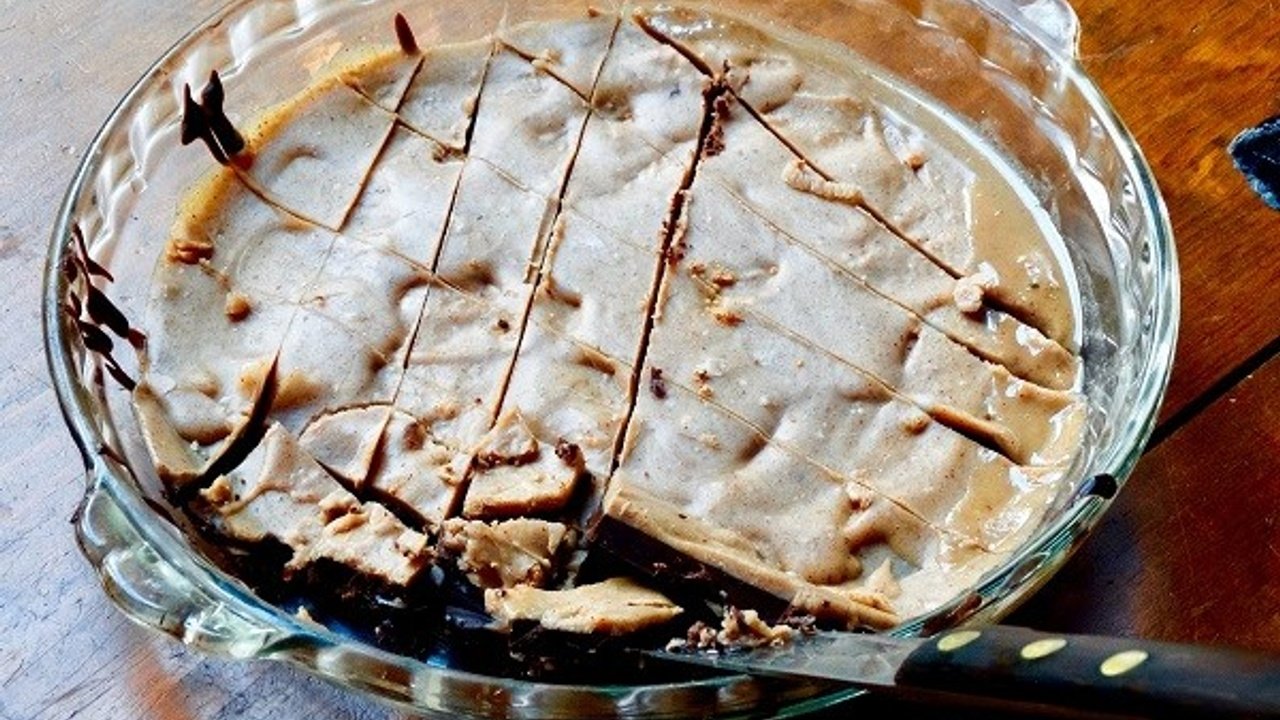
These delicious, nutritious “fudge” treats are packed full of nutrition—plus, they’re an awesome way to incorporate herbal and mushroom powders into your diet. Enjoy!


Links mentioned in this episode

Website: www.corinnawood.com

Blog article & recipe: Holistic Nutrition Fudge Treats

Free Seminar: Self Healing for Earth-Based Women

The Nurtured Herbal Practitioner | Erika Galentin

The Nurtured Herbal Practitioner: 5 day retreat to rest, reflect, and rekindle your clinical journey | Sovereignty Herbs

Where: The United Plant Savers 370-acre Goldenseal Botanical Sanctuary sits in the Appalachian Foothills of Southeastern Ohio.

When: April 23-28 2023

"At Sovereignty Herbs we believe the world needs more clinical herbalists who are thriving in their practices and that collaboration and community can lift us up to rise together in our profession.

Whether you are a student of clinical herbalism transitioning into becoming a practitioner or a seasoned clinical herbalist with years of practice experience, we invite you to join us April 23-28 for The Nurtured Herbal Practitioner Retreat.

Come rest, reflect, and rekindle yourself in community with other clinical herbalism practitioners at the stunning United Plant Savers Botanical Sanctuary during Appalachia’s peak woodland medicinal herb and wildflower season.

During this 5-day retreat, participants will enjoy core workshops taught by experts in clinical herbalism and entrepreneurship as well as facilitated roundtable buzz sessions unpacking complex topics such as navigating burnout, maintaining core values in business practices, and facing fears within our clinical careers.

There will also be ample opportunity for deep rest and connection through guided medicinal plants hikes, joy-building activities and revelries, and free time to explore the Sanctuary, swim in heart pond, or read in the Jim Duke library at the Center for Medicinal Plant Conservation.

Reconnect by coming together in community for social and professional support.

Rekindle your passion by Illuminating new perspectives about an embodied approach to entrepreneurship and clinical practice.

Rest by claiming space away from the daily grind of zoom calls, client emails, and digital marketing demands.

Reestablish relationship to the natural world and the plants as your source of inspiration and purpose."