
This video was provided courtesy of the Majestic Wisdom Podcast hosted by Heather Sanderson.
In this episode of Majestic Wisdom Podcast Heather co-creates with Mason Hutchison, founder and owner of HerbRally, a never-ending online offering and ecosystem that connects people with plants (and with plant people) both virtually and in body. Mason shares his journey of where HerbRally came from, what it is, what it means to him, and how both it, and he, continue to evolve through this offering. He also talks about a new creation, The Art of Frugal Nutrition, an ever-expanding class series that has been in his heart for some time (and touches on Dumpster Diving with Guisepi Spadafora too).
In this episode, you’ll hear more about these concepts, and Mason’s thoughts and approach to what he brings to the world, and to life. Heather offers a plant spirit reading for Mason, connected with his being. We hope that this podcast will help you expand your mindset, try something new, and listen to your heart.
This video is also available as a podcast, and you can find more Majestic Wisdom Podcast episodes here: https://majesticwisdompublishing.com/podcast/
Heather also writes short workshop-style books with the plants and trees to help people connect with the energy, spirit, medicine, and consciousness of the plants, and bring this connection into everyday life. For these and other offerings, visit http://www.majesticwisdompublishing.com.
Mentioned in this episode
For more about Mason: https://www.herbrally.com/about
Visit HerbRally: https://www.herbrally.com/
For more on the Art of Frugal Nutrition: https://www.herbrally.com/frugalnutrition
Mason on Instagram: https://www.instagram.com/masehutch/
HerbRally on Instagram: https://www.instagram.com/herbrally/
Facebook: https://www.facebook.com/herbrally/
Connect with the Plants: Plant and Tree Spirit Short Reads by Heather: https://majesticwisdompublishing.com/books/ and you can follow her author page on Amazon: https://www.amazon.com/Heather-Sanderson/e/B0829HZNQZ for future book offerings
More with Heather
For classes, workshops, Reiki sessions, and other offerings: https://journeythroughyoga.com/
For Plant Medicine Readings: https://majesticwisdompublishing.com/plant-medicine-reading/
Sign up for Heather’s newsletter: https://journeythroughyoga.com/enewsletter/
Follow on Instagram: https://www.instagram.com/heather.sanderson/
Support this podcast: https://anchor.fm/majesticwisdom/support
Want more herbal goodness?
🌼Sign up for the HerbRally newsletter and receive these SEVEN herbal freebies!
✔️ 86 page ebook by Plant Healer
✔️ 5 Herbal Events Around the World | Video with Bevin Clare
✔️ 36 Page Book Excerpt from "Nourishing Foods" by Plant Healer
✔️ Calendula monograph by Rosalee de la Forêt
✔️ Hour long adaptogens class with Heather Irvine
✔️ Exclusive 15% off discount for Mountain Rose Herbs
✔️ 10% off discount for the HerbRally store
👉 CLAIM YOUR FREEBIES! https://mailchi.mp/herbrally/herbal-freebies

Fly, Spore Fly | A mushroom song with Logan Keister
Grab a cup of reishi tea and enjoy this fun mushroom song written and performed by herbalist Logan Keister! We traveled down to southern Oregon to hang out with this wonderful fellow, so stay tuned for some exceptional videos where Logan takes us on an herb walk. If you enjoyed it, show some love to Logan in the comments section!
Backup vocals - Mason Hutchison
Directed by - Amanda Hutchison
➡️ Follow Logan on Instagram: https://www.instagram.com/notibotanica/
➡️ Etsy Shop: https://www.etsy.com/shop/notibotanica
🌿Logan Keister (he/him) is a clinical herbalist, wildcrafter, medicinal herb farmer, amateur mycologist, astrologer and herbal medicine maker born and raised in the coniferous forests of Western Oregon. Currently he grows medicinal herbs at Strictly Medicinal Seeds and runs his own business Noti Botanica that focuses on clinical herbalist consultations, education and custom herbal formulation. Logan received his clinical herbalist training at The Columbine School of Botanical Studies, The Matthew Wood Institute of Herbalism, The School of Evolutionary Herbalism, and has a B.S. in Horticulture from Oregon State University.
LYRICS
Chorus
Fly spore fly from my basket may you fall
and may moisture be abound when you touch the cold hard ground
so you’re hyphal threads may spread around
The mushroom be like the apple in the tree while the mycelium is like the tree underground so pick it while it’s ripe and hold it by your side so those spores may get their ride
Chorus
Fungi got so many genders they can mend them they can bend them to mate with almost whoever they please
but with all that sexual wealth they find it’s easier for their health
to take a cheap date and just mate with them self
Chorus
Spores everywhere even in the air
in every breath that we take
they use us as their house
so it’s not too crazy to find out
they found 101 Fungi living in our mouth
Chorus

MY TEA POT - YOUR TEA POT
by Bella Donna
TEAPOTTING
If you’re ever driving down the road with me, don’t be surprised if I slam on the brakes at a sight of some wild elderberries in full bloom, or an old peach tree on the side of the road.
When I lived in the Midwest I harvested sage, dandelions, peppermint, peach leaves, rosemary, and other wild and planted herbs for my own tea blends. In the high desert of central Arizona, I collected chaparral, Mormon tea, blackberry leaves, brittle bush, globe mallow, and others medicinal delights. Now, living at the southern tip of the Appalachian Mountains in northern Georgia, I am collecting a plethora of more wild and cultivated plants than I ever imagined. “The hills are alive…” is what I think every time I wander around in my own yard or woods. There is hardly anywhere I can go here and not see something delicious.
Throughout most of the year, daily between early spring to late fall, I am collecting something to dry. My poor dehydrator can sometimes run for weeks, three eight-hour cycles, round the clock. The spring months offer young, tender plantain leaves, early wild violets, young maple leaves, and a bounty of sassafras roots. If there is any local tree removing going on at my property or close by, I’m always hopeful to harvest pine needles from the ponderosa pine; this is the easiest pine to identify with three needles per socket.

My dried collection has gone into a number of different size and shaped vessels over the years. A half-gallon of blended herbs tends to last me at least a year. Whatever is captured in my collection at any time is “my tea pot.” With the layering of the different herbs from different seasons, and unique blending together of wild plants, herbs, tree leaves, roots and barks, constantly changing and evolving, there is much enjoyment to the subtle flavor variations of each honey sweetened and delicious cup of health and heaven.
Over the years I’ve encouraged others to have their own “tea pots” as a collection of unique, local, and personal favorite herbals. You can think of this similar to sour dough starter. You start with a base of herbs, from your own collection, from a friend, or from a bought package. Pour it into a jar, decorative vessel, or any type of container. I started with pint jars years ago, then graduated to quarts and half gallons. Now I use gallons or big old vintage cookie jars. You can make your own with something having sentimental value to you. Our tea drinking enjoyment starts way before the first sip.
Today, as you are reading this, I’d like to suggest, encourage, and challenge you to start your own “tea pot.”
HERE’S HOW:
Begin with exploring what edible herbs are right out of your back door. There is a tradition health practice of ‘eating local’, not just to support local but because it is better overall for our health.
Here is some information if you are interested in knowing more about this: https://5seasonsdiet.com/eating-with-the-seasons
And here is a free downloadable link to a great book Staying Healthy with the Seasons by Elson M. Hass: https://best.shoopbook.com/?q=1587611422
Consciously and lovingly collect what you find, wash each piece of plant material off really well with running water. Dry well. I dry by wrapping in a towel loosely for a few hours, even sometimes overnight. The process of drying herbs for tea is simple and will become routine to you quickly.
Lay plants in your dehydrator, following directions with temperature and time, and rotating racks halfway through the process.
When completely dry, grind or crush into small piece and put into your container.
Every day or every few days, or even once a week or once a month, you can collect more dried herbs to add to your “tea pot.”
You can use the herbs as-is, 1 teaspoon per cup of not-quite-boiling water. Or you can cut 50/50 with black, green, white, or rooibos tea. The rooibos is a favorite of mine and many others who do well to avoid caffeine.

Common North American plants that make up a quality, healthy, and nutritious blend, and are found nearly everywhere on the planet, include any or all of the following:
Lavender, rosemary, or thyme leaves and blossoms are international herbal standards.
Parsley, cilantro, and different varieties of basils are fun to explore.
Blackberry or raspberry leaves are packed with nutrients; the younger the better.
Echinacea leaves, flowerheads and roots, all work well in most herbal blends.
Oranges, lemons, limes, and grapefruits, whole dried fruits including seeds can be used.
Citrus leaves, without pesticides, also add a refreshing flavor to blends.
Mint varieties can include spearmint, peppermint, orange mint, lemon mint, and citrus and many other interesting flavors.
Peach tree leaves offer a mild, fruity flavor to blends.
Rose blossoms and rose hips infuse a nice calmness to any cup of tea.
Lemon balm and fennel add a fresh feeling to the taste buds.
Explore and experiment; notice how some teas taste better during certain season. Citrus blends are refreshing in the summer months. Heavier flavors or root blends are more beneficial to us during the colder months.
Have fun, enjoy the self-exploration between you and nature, be healthy. Stay healthy, and be sure to share your “teapotting” experience with friends and family.
BELLA DONNA | Wholistic Healthcare Facilitator —Beekeeper, Aromatherapist, Apitherapist, Herbalist, Life and Health Coach, Reiki Practitioner and Teacher.
LEARN MORE ABOUT BELLA DONNA
www.beehealthy.biz


Winter Wildcraft for Respiratory Ailments
By Jennifer Sala
There I was, an herbalist with a problem...
For many years I suffered from recurrent infection that attacked my lungs every winter. Here in Maine, winter is bitingly cold and takes up the better part of the year, or so it seems. Now, I’m not much of a wildcrafter but this much I have done – after all, the dog still needed a long walk on warmer days (though she was aging and not much for being out in the bitter cold too long) and I couldn’t handle a few rounds of antibiotics and steroids Every. Single. Winter. I was basically a super frustrated herbalist with that canary in the coalmine constitution. Something had to give, nothing could touch the infection. When I made this, I was privileged to live in a tiny rural coastline neighborhood with a neighbor who owned plenty of wooded shoreland ripe with winter foragables and had given me permission to do my thing.

One unseasonably warm day walking the dog out there I noticed a conspicuous greenish brown seaweed-like something growing on a tree right next to the trail – how had I never noticed it before? It distinctly looked like the pulmonary lobes of lungs. So, considering the Doctrine of Signatures philosophy, I was inspired to learn more. I went home and looked this strangely beautiful stuff up and found it to be a lichen known as lungwort, not to be confused with the flowering sort. It can be referred to by its scientific name Lobaria pulmonaria instead, which alludes to its resemblance to the pulmonary lobes, to avoid confusion. It turns out, when dry it turns more gray and camouflaged. When moist it is more green, and presumably more mucilaginous so this is when I would recommend harvesting it. It has several acid components, including fatty acids, and tannins. It is an astringent, demulcent, and tonic herb and the best extraction method seemed to be through tincturing. It is said to be beneficial for wound healing as well, but here we’re more focused on its affinity for coughs, tuberculosis, chronic lung infections, asthma, pleurisy, and emphysema. Sounds like a winner! It is especially indicated if coughing up bloody sputum as it stays internal bleeding (and slows heavy menstruation). Turns out, there was lots of it growing in the area so I only took a single fair-sized specimen, enough for a jar of tincture. I decided to try brewing a lung healing tincture and added it fresh.

By this time, I had been practicing home herbalism for a few years and was already familiarized with some other handy, local herbs. I was in love with pine needle tea and it indeed is lovely for agitated lungs. When reading on foraging Eastern white pine you often see the description of five needles to a cluster and this is how Pinus strobus is identified. I always verify this when meeting a new one, especially if I intend to ask it for resin/pitch/sap/needles, but I cannot recall a time this was not the configuration I found. This may be circumstantial because of locality but if you’re skittish about wild plant ID like I am, this is one you’re probably safe with, in my experience. You may have noticed in the winter when everything is dead that there will be shredded pine cones atop the snow, this is because within the pine cone are the seeds (or “pine nuts”) which non-hibernating birds and mammals rely on for a seriously impressive nutritional profile throughout the winter (you may know pine nuts from pesto as well – they are expensive but utterly delicious and nourishing). I had two of these in the middle of my yard and we had just had a storm so there were a few still fresh branches in the snow. Easy peasy.
Like most pines and such, Pinus strobus is high in volatile oil and is often used in essential oil blends, especially around Christmas. Pine resin salve is a well known and powerful antiseptic and restorative herbal first aid remedy but is also fantastic internally. The resin salve is used in herbal first aid for its cell restoration power and because it is powerfully anti-microbial and antiseptic. The resin is extracted from the leaves as it is throughout the tree like blood to an animal and, while it does come out in water, tincture is best. It is also excreted from the tree trunk itself in a collectible volume, a dab will usually do.
The leaves make a reinforcing, affirming tea that is spectacular with raw honey. Its flavor is sweet, citric, slightly sour with a warm rising essence. Either way, taken internally, white pine is aromatic and uplifting, making it functionally an expectorating decongestant (as well as antidepressant, tonic, and anti-catarhal). It is quite vulnerary, helping your body to repair and regenerate cells. Containing considerable amounts of Vitamins C and E, it is anti-oxidant and strengthens the immune system. Resin excretion is the tree’s way of protecting itself from infection. So naturally, it works on us the same way. It also is high in flavonoids, especially chrysin, which makes it subtly similar to chamomile and they are tasty together. White pine is considered of assistance in coughs, colds, flu, bronchitis, pneumonia, sinusitis, and sinus or bronchial congestion. It also extracts fresh in honey quite nicely. This takes a few weeks, as does tincture. I haven’t had much luck drying or storing the needles without an issue of some sort but it can be harvested easily year round in my area so it’s not much of a deterrent.

Eastern white pine has been appreciated by many tribes. In my local area, the Wabanaki Confederacy, have been using it for an extremely long time. There are accounts of indigenous folk in New England coming to the aid of European voyagers suffering scurvy with pine needle tea. Unfortunately, it was greatly over-exploited for over 150 years after white settlement for structure framing, woodworking, and ship building. However, they can live hundreds of years if left to thrive. Few elder stands still exist today, though it is in no way threatened, at least locally. In Maine, it is our state tree and it’s absolutely everywhere. You don’t even have to cut the tree at all to harvest leaves, as the delicate branches snap off in the wind and each yields seemlingly gazillions of the long rich needles. I made the lovely, magnificent Pinus strobus the primary of my tincture.
Another local herb I had fallen in love with was Usnea barbata, also known as old man’s beard. It is a pale green, thin and tangled mass that grows out of conifers and deciduous hardwoods, most notably in my mind on oak and apple trees. It is a lichen, which means it is a symbiotic relationship between an algae and a fungus. It cannot grow in highly polluted air (nor can Lobaria pulmonaria) and is an indicator both of decent air quality. It can also be a sign of declining air quality if you see a decrease in its localized population over time. That being said, it also absorbs air pollution so please take that into consideration when looking for a supply. Indigenous tribes use it as an expectorant and wound dressing, as well as for absorbing menses. It is quite dry, cold, dispersive, and bitter. I like to imagine its tendrils reaching around inside my body and looking for sickness to suck up and out.
I find it is best gathered in the winter and works most impactfully when the lungs are hot, packed, and boggy, though I admittedly munch a little like a moose every time I find it thriving. Not super tasty, but I love it anyhow. It could be confused with Spanish moss (which we don’t have around here anyway) but is distinguished by a quick test. If you gently pull on a thick strand of Usnea it should stretch like a rubber band, exposing a white tendril inside the green coating. This is brittle and non-stretchy in Spanish moss.

Usnea thriving off open ocean air
Usnea has a long history of medicinal applications all over the world. It is not known when it was first used, though there are records of some varieties being used in Chinese medicine for over three thousand years. It is sometimes thought to have been first used in Arabic medicine. It was also used in Japan, Korea, parts of the eventual Soviet Union, Germany, and - as discussed - in precolonized North America. It is anti-inflammatory, expectorant, a bitter, disinfectant, broad-spectrum antibiotic, and anti-fungal. It’s antibiotic capacity works on gram positive bacteria, the type that retains crystal violet dye after decolorization in a petri dish (gram negative bacterial cells have an outer layer that prohibits this and must be broken down to kill the bacteria). As you likely will not know whether your bacteria is gram positive or negative, it is best paired with another antibiotic. It flushes systemic infections (like that of the kidneys, bladder, and lymphatic system – we love anything that helps the lymphatics and filters do their job!). It is reported to be helpful with candida, strep, and respiratory ailments like TB, bronchitis, and pleurisy. Lichenic acids (usnic and barbatic, not surprisingly), Vitamin C, fatty acids, and sterols make up some of the plant’s power, but as always there’s much more to it than just a simple few things.
I can’t help but mention, too, that when I had my wisdom teeth pulled (as an adult) the dentist tried to make me promise I would at least take aspirin when I got home after I refused an opiate prescription but I didn’t even do that – like I said, canary in a coalmine – I hadn’t taken a single OTC painkiller in like five years by that point and knew I would flare up in ulcers if I did. So I pulled in my driveway, walked across the yard to the nearest beardy tree, balled up two little wads of usnea, pulled out the cotton balls, and stuck a wad of usnea on each side between the cheek and gum in place of the cotton balls. Within thirty minutes the swelling had largely subsided so I just continued this a couple times a day for the next three or four days and, like a charm, I healed up quick and (relatively) painlessly! Usnea is given in homeopathy, herbalism, and naturopathy today for bronchial afflictions and infections. Needless to say, this was going in fresh as well!
Lastly, I knew of some birch polypore mushrooms growing bountifully, about a hundred feet from the Lobaria pulmonaria I encountered, so while we were out gathering that I had cut a couple mushrooms (smaller are nicer to prep, the big ones are pretty woody). It is also known as razor strop because in Victorian times it was used to safely keep sharps, by virtue of its styrofoamy nature. It has had a multitude of creative uses over the course of history. From polishing silver and kindling fire to tea, tincture, and food it really is a multifaceted little fungi. In 1991, Ötzi the Iceman was discovered preserved in a cave for over 5,000 years and was found with a sachet of birch polypore. Upon further assessment, scientists suspect he may have been using the mushroom as a wound protectant or for his intestinal parasites. It is appreciable for skincare and as a lymphogogue, anti-cancer, anti-microbial, anti-inflammatory, anti-parasitic, laxative, anxiolitic, and as an aid to Chronic Fatigue Syndrome – being sick does take a lot out of you so I liked that it supports the body’s energy level helping me heal faster and get less run down. It has terpinoids, anti-inflammatory acids (polyporinic acid, for one), and glucopyranans. Energetically, it’s cooling, calming, dispersive, and bitter. It inhibits the spread and reproductive processes of disease, including viruses. I have also made an immune boosting elixir using birch polypore and white pine tincture with elderberry extracted in raw honey and found it superbly effective.

If you have chaga you could use it in place of birch polypore. Interestingly, where the polypore grows typically chaga does not, and where you find chaga you are unlikely to find these polypores. However, if you are going to forage for chaga it is imperative you do not overharvest (or be sure the harvesters you obtain it from, if buying it, are responsible) lest the tree be made vulnerable to disease with this new giant gaping wound to try to heal by itself before it succumbs to pathogen and rot. The proliferation of chaga is also impaired with this type of wildcraft practice. Here in Maine, I have had an extremely difficult time finding untouched chaga. I have found trails with every single chaga growth carved completely out – this is incredibly irresponsible. Never should more than 20% (or 1/5) of a growth be removed. If some has already been removed, find another. If you can’t find another don’t take any. It’s that easy. Birch polypores are much less commonly collected, in my observation, and I seldom find any removed, plus the chemical and energetic profile works quite well with the other herbs in this blend. Because of this, I choose wildcrafting with the polypores instead, as much as I enjoy the replenishing fortitude of chaga.
I filled a mason jar with 1/5 polypore slivers (about 1/8”x1”x1”), 1/5 usnea, 1/5 lungwort, and 2/5 white pine. I then filled the jar to about half an inch above the herbs with 150 proof vodka (the highest proof available in my state). After 4 to 6 weeks in a cool, dry, dark cupboard, shaking regularly, it should be ready. Because of the tannins, you will have sediment so a coffee filter in the funnel will give you a cleaner finished product. If a strong alcohol kick in a tincture is too much for you (or the flavor is too…unique), adding honey to turn it into an elixir can help. The elderberry infused honey mentioned above would be an extra immunological and soothing burst for better flavor. Personally, I consider the alcohol burn a bonus expectorant and decongestant and like to take this preparation as is. Even though it’s an acquired taste (unless you like sour bitters), I have more than once woke up in the night feeling something coming on, done a dropper, and woke up feeling fine so it is totally worth it. It immediately relieves symptoms and cut my duration of active bronchial and sinus infection down to just a few days from several weeks. Sometimes I would take a sip if I was really miserable – like when I didn’t know I had any left and found the jar with about an inch and a half in the bottom one time desperately searching for relief. How happy I was! I made this probably three years ago and found out this summer my recurrent infection was from a tick borne infection. The fact that the infection was not fully absolved with the tincture (it sought dormancy in my brain so these herbs would indeed be inadequate for that job), it was rebuked from where it was flaring and pushed back into dormancy. Even so a four ounce dropper bottle (finished product, no herbs) had me feeling confident in my bronchial resilience for a little over two years.

Hi! I am a crunchy herb-nerd from Downeast Maine. I have been, at times gracelessly, managing multiple chronic diseases at home for over ten years through holistic remediation. It started with kidney supportive dietary changes and eczema friendly food-based skin care in my late teens and now my tea cupboard is overflowing! My understanding is based mostly in western holistic herbalism but I pull a lot of theory from Traditional Chinese Medicine or wherever appropriate or useful at the time – as far as I can tell there is validity to every foundation. I am an aspiring registered herbalist with the American Herbalist Guild, working on the long list of requirements to apply, and student of a couple online herb schools– not to mention years of self-education and self-study. One day soon I’ll be taking clients, probably over tele-meeting. In the mean time, I’m so glad and excited to be stepping out into the greater herbal world to share what I have learned and put my hard work to greater application outside of my own tiny sphere :) I’m grateful to be part of such a beautiful, benevolent subculture and human journey.
Lots of lilacs – Jennifer Sala
Cassia, Bevin Clare's daughter, takes us on an herb walk in Northern Ireland
Cassia and Bevin Clare take on Northern Ireland, where the spot some rosehips and nettle. Cassia even gives us some magical tips and tricks on how to dig up some fossils and gems from a fallen down tree, and tells us her favorite ways to create jewelry out of her finds.
More videos to come from this powerhouse mother & daughter duo, as they continue their adventure in beautiful Northern Ireland!
BECOME A WORLD TRAVELER WITH BEVIN CLARE Her "Ready to Roam" course comes with tons of practical and fun videos, a customizable digital journal for you to use and an online community around to offer support, it will get you ready for the trip of your dreams! Plan it all without the overwhelm, a step-by-step manual to finding your dream destination, booking your own flights, and taking the leap to creating an adventure, in your own way. The complete course bundle includes: LEARN MORE AT: https://www.bevinclare.com/courses

🌼Sign up for the HerbRally newsletter and receive these four herbal freebies!
✔️ 86 page ebook by Plant Healer
✔️ Calendula monograph by Rosalee de la Forêt
✔️ Hour long adaptogens class with Heather Irvine
✔️ Exclusive 15% off discount for Mountain Rose Herbs
Favorite Ways to Use Rose | Elaine Sheff with The Green Path Herb School
Join herbalist Elaine Sheff as she shares her favorite ways to use rose. The roses in this video were grown in her garden at the Green Path Herb School in Montana. She talks about how roses are good for overall health, strengthening the heart, a wonderful ingredient for body care products, and more! She especially loves rose tea, tinctures, and oils incorporated into her daily routines. If you enjoy the video, please give it a thumbs up! Thanks for watching. Learn more about Elaine and the Green Path Herb School: www.greenpathherbschool.com
✨ELAINE SHEFF, CO-DIRECTOR, CLINICAL HERBALIST, RH (AHG) is the author of several books on herbal medicine and healing, clinical herbalist Elaine Sheff has been passionate about sharing herbal knowledge for over 30 years. Her latest book is Naked: Botanical Recipes for Vibrant Skin and Healthy Hair. Elaine is the Co-Director of Green Path Herb School, located in Missoula, Montana, where she strives to inspire and empower students and clients to remember their connection to the earth, the plants and their own healing process. She is a professional member of the American Herbalist Guild and teaches workshops, and at conferences, both nationally and internationally.

🌼Sign up for the HerbRally newsletter and receive these four herbal freebies!
✔️ 86 page ebook by Plant Healer
✔️ Calendula monograph by Rosalee de la Forêt
✔️ Hour long adaptogens class with Heather Irvine
✔️ Exclusive 15% off discount for Mountain Rose Herbs
Evolution of HerbRally with Mason Hutchison
Hey everyone, thanks for watching! We just wanted to do a short video about where HerbRally came from and where it's goin'! We've got a lot of excited projects in the works and we're happy you're here with us to join in on the fun.
If you love HerbRally, please give this video a big ol' thumbs up!
Thanks for bein' here ❤️ ~Mason
Connect with me on LinkedIn - https://www.linkedin.com/in/masonhutchison

Preface | The Botanical Green Book with Derek Haynes
Derek Haynes AKA The Chocolate Botanist introduces us to his new project, “The Botanical Green Book”. In the year 1936, Victor Hugo Green wrote the first volume of “The Negro Traveler’s Green Book” which helped African-American travelers in the US find safe, and legal, places to stay, eat and safely travel.
This new monthly video series with Derek is inspired by the Green Book, and he’s going to take us around the plant community introducing us to black botanists, horticulturists, herbalists and plant people. Stay tuned for chapter one, coming soon!
Follow Derek online: TheCrazyBotanist.com
Instagram: @thechocolatebotanist

The Exquisite Beauty of Nature
Written by Suzanne Tabert
Photographed by Amanda Hutchison
Become Part of the Exquisite Beauty of Nature!
There are many more benefits to foraging plants in the wild than just the medicine they offer.
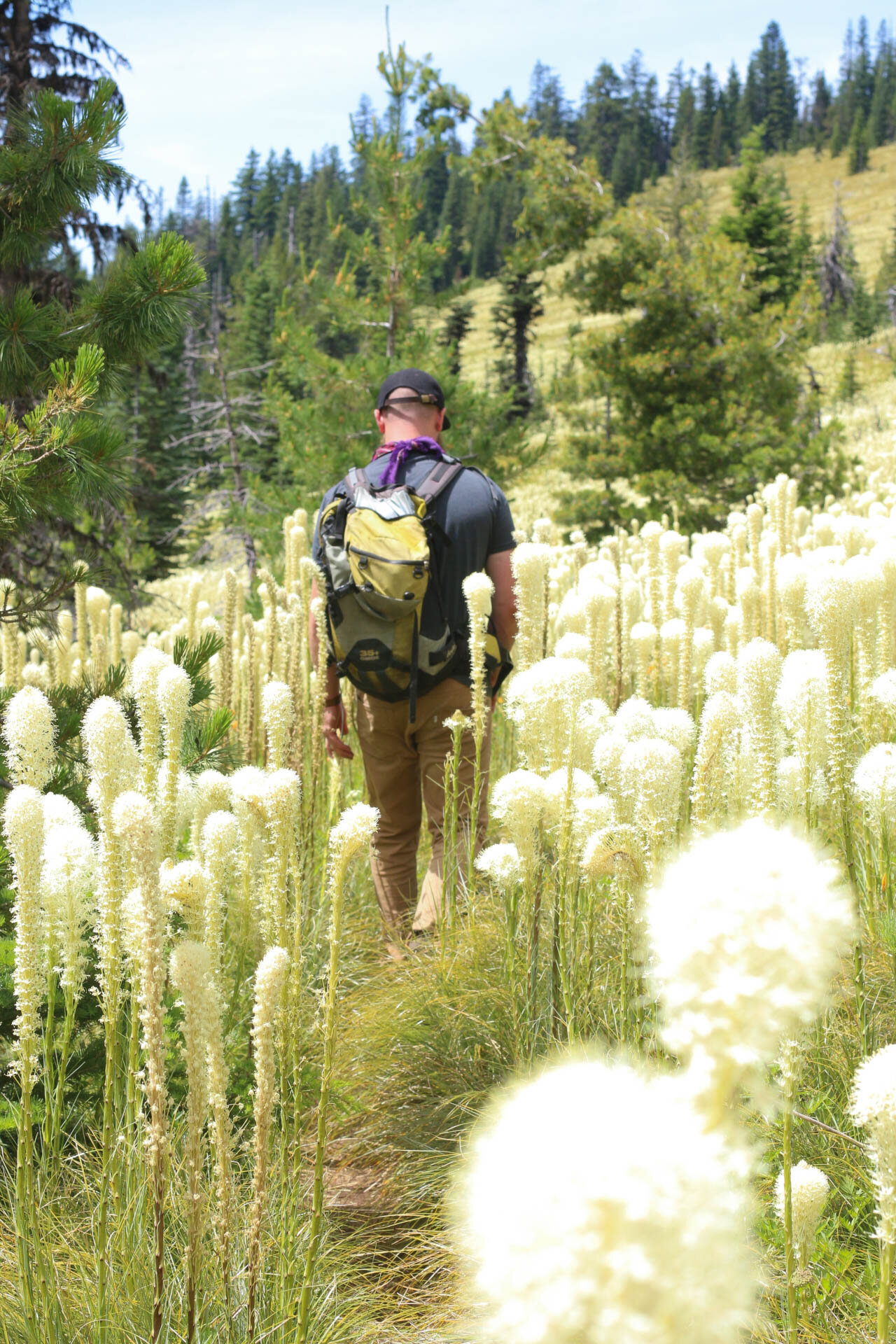
Before we pick our first plant, we are brought into the exquisite beauty of nature. It’s the peace and quiet that first draws attention. The utter calm that is so different from the jarring electricity of the urban or suburban areas where many of us live. After appreciating the freedom from disturbance for a few moments, we begin to notice the sounds of the area: birds calling, insects buzzing, whispers of larger animals moving just out of sight, sounds of water from waves on the beach, creeks and waterfalls up in the mountains, wind rustling leaves and branches.
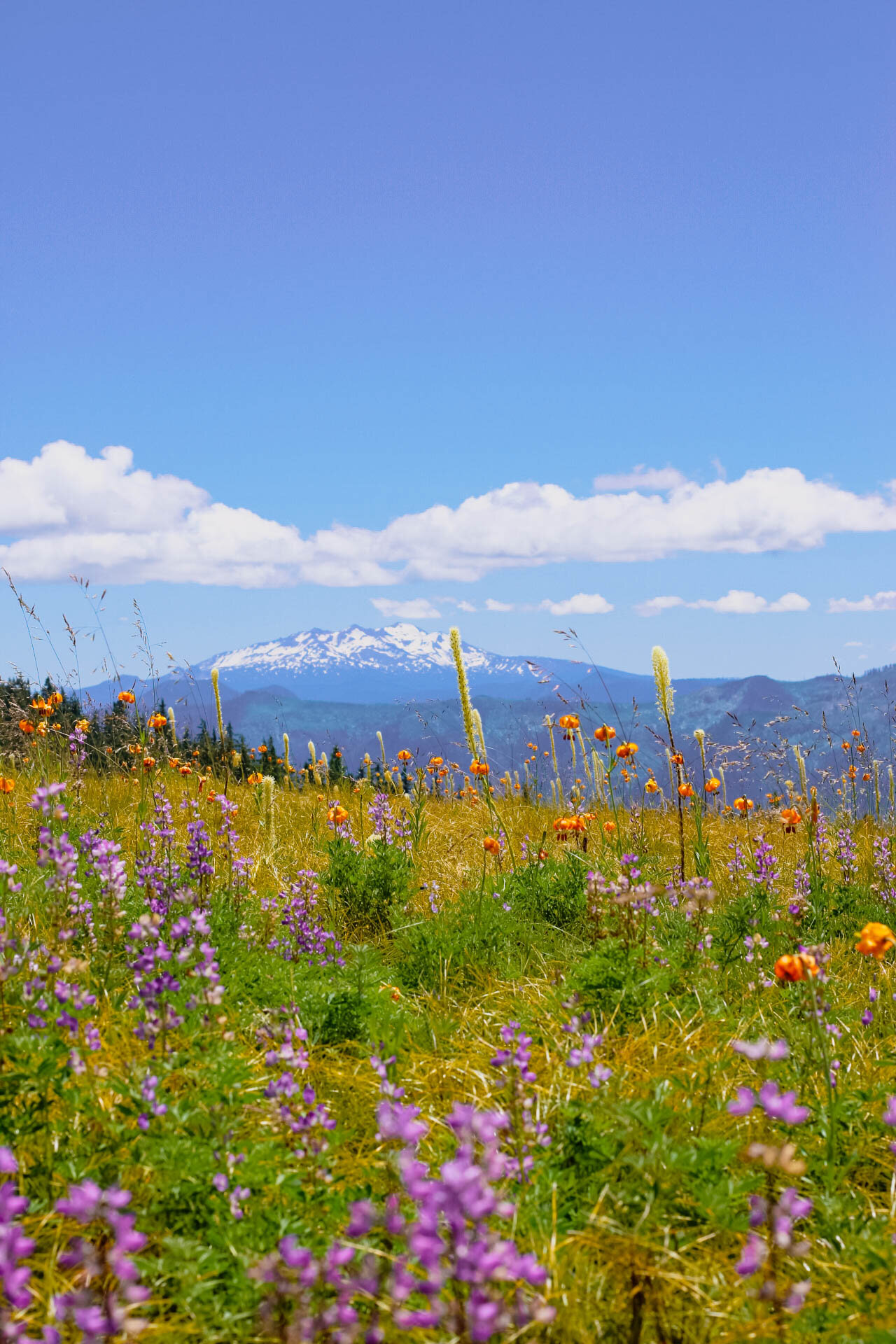
Lungs take in deep breaths of fresh clean air and our souls unfurl like new fern fronds emerging from the ground in the spring. Then the colors. Oh the colors! Greens of all hues, yellows, reds, blues, pinks! Each month brings forth colors that reflect their seasonal personality.

As for myself, when I’m walking in the woods, I’m with friends. Leaves wave as I walk past. The plants are happy to see me, I can feel it. Insects buzz around my ears. I strain to listen, wishing I could slow down their language so I can understand them better. Still, I listen, hoping to pick up a word or two. Cool breezes dry the sweat on my skin. In nature, I don’t feel shoved to the side or looked upon as that “weird plant woman,” because of my keen sensitivity to plants, trees, and animals and their unique ways of communicating. In fact, I’m all the more welcomed for it! It’s beautifully transforming simply by being among the woods and everything in them.
Whenever I respond to nature’s resounding lure, my soul is once again satiated with a sense of belonging.

On a hike to a waterfall, I had the profound realization while watching the water flow that there is no “he said, she said” in nature. No guilt or worry, no seeking of approval or doubts about self worth. Nothing and no one is regretting what happened before or wondering what is to come. It seems to me that, in nature, everything just “is.” We all have the supreme opportunity to exist in that fashion just as the rest of its inhabitants do, if we choose. And if only for a short time, it brings us back to who we really are. It’s not about taking pictures for social media. It’s about sitting by a favorite tree or rock; we can go in grieving and come out feeling the peace that surpasses all understanding. Unexplainable, miraculous peace.
It’s still possible to get outside and find healing in the bosom of nature while practicing safe physical distancing. A simple walk in a park will present plants that want to meet you. Look for the single leaf waving when others are not. Breathe them in and give them your breath when you feel overwhelmed. The exchange of oxygen from plants and carbon dioxide from us show us how intertwined we are. Plants and humans connecting.
Often the very plants we need grow right outside our door, presenting themselves to us, if we just take a moment to notice.
Whether deep in the forest, on a beach or meadow, or tucked into a pocket of nature in the city, the natural world calls us to go deeper. To reach farther in. To become part of the community of flora and fauna. We were never meant to be separate. We are a part of a whole and we are welcome.
I encourage us all to get out into nature as often as we can. We are always invited. We are always welcome. We are always included in the collective. And when we are part of the whole, so too are we healed.


Suzanne Tabert is a bio-regional herbalist, wildcrafter, founder and director of herbal education at the Cedar Mountain Herb School, teaching from a lifetime of personal and academic studies of plants and their habitats. She is a member of the American Herbalists Guild, the American Herb Association, Partner in Education at United Plant Savers, and is practicum supervisor and adjunct faculty at Bastyr University. She has been teaching herbal medicine for 30 years, with plans to continue throughout her lifetime.
Campfire Chili Bowl
Written and photographed by Amanda Hutchison

I’m not kidding you when I say I thought camping food only consisted of hotdogs and hamburgers, with s’mores as a tasty snack around the fire. Camping for me is all about being simplistic, the little things that brings so much joy on my adventures- but why should I apply that to my food?
Now before you start thinking that you have to bring your whole kitchen to the woods, I want to ensure you that this recipe isn’t something you’ll find at a five star restaurant, but it definitely brings a fun and new exciting twist to cooking outdoors. Still requires a good ole fire (during fire season bring a portable gas grill), a pan, and a boat load of spices that makes any dish from simple to “holy smokes that’s a lot of yum!”
Me and my fiancé, Mason, as some as you may know, decided that our next camping trip we are going to make a simple yet delicious dish just to prove how easy it really can be to eat in style. Below is the recipe to our “Campfire Chili Bowl” but please feel free to play around with portions and other spices that inspire you!

Campfire Chili Bowl
Serves 3 (or depending how hungry you really are)
1 hour prep+cook time
Ingredients:
1 bell pepper
8 heads of mushrooms
2 small onions
2 limes
3 garlic cloves
1 can of corn
1 can of tomatoes
1 can of beans (Kidney)
1/2 cup veggie broth
1 Tbsp cumin powder
1 tsp oregano
1 tsp paprika powder
1 tsp black pepper
1/2 tsp chipotle powder
Splash of cooking oil
Salt for taste
Sour cream (optional)
Cilantro (optional)
Green onion (optional)
Directions:
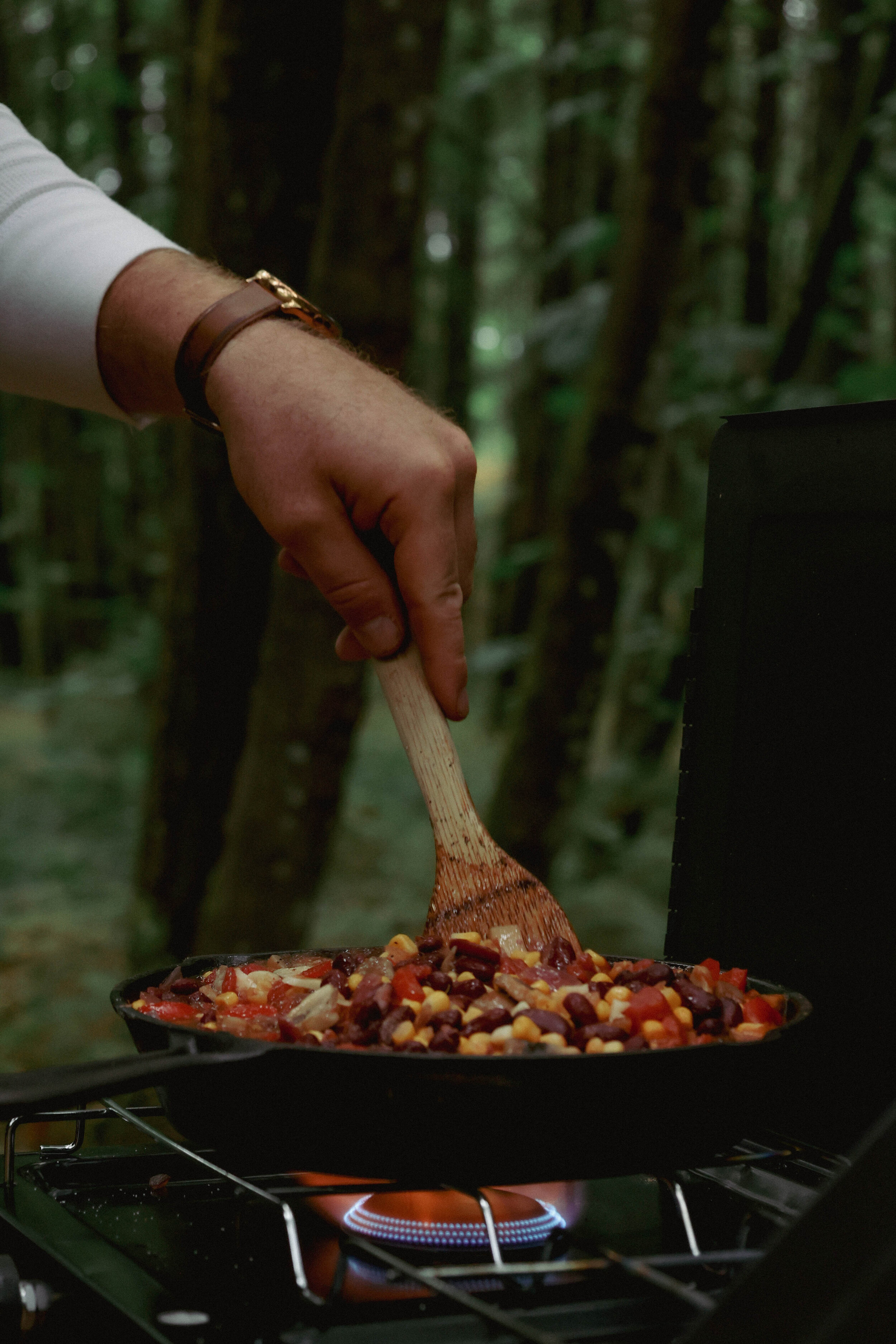
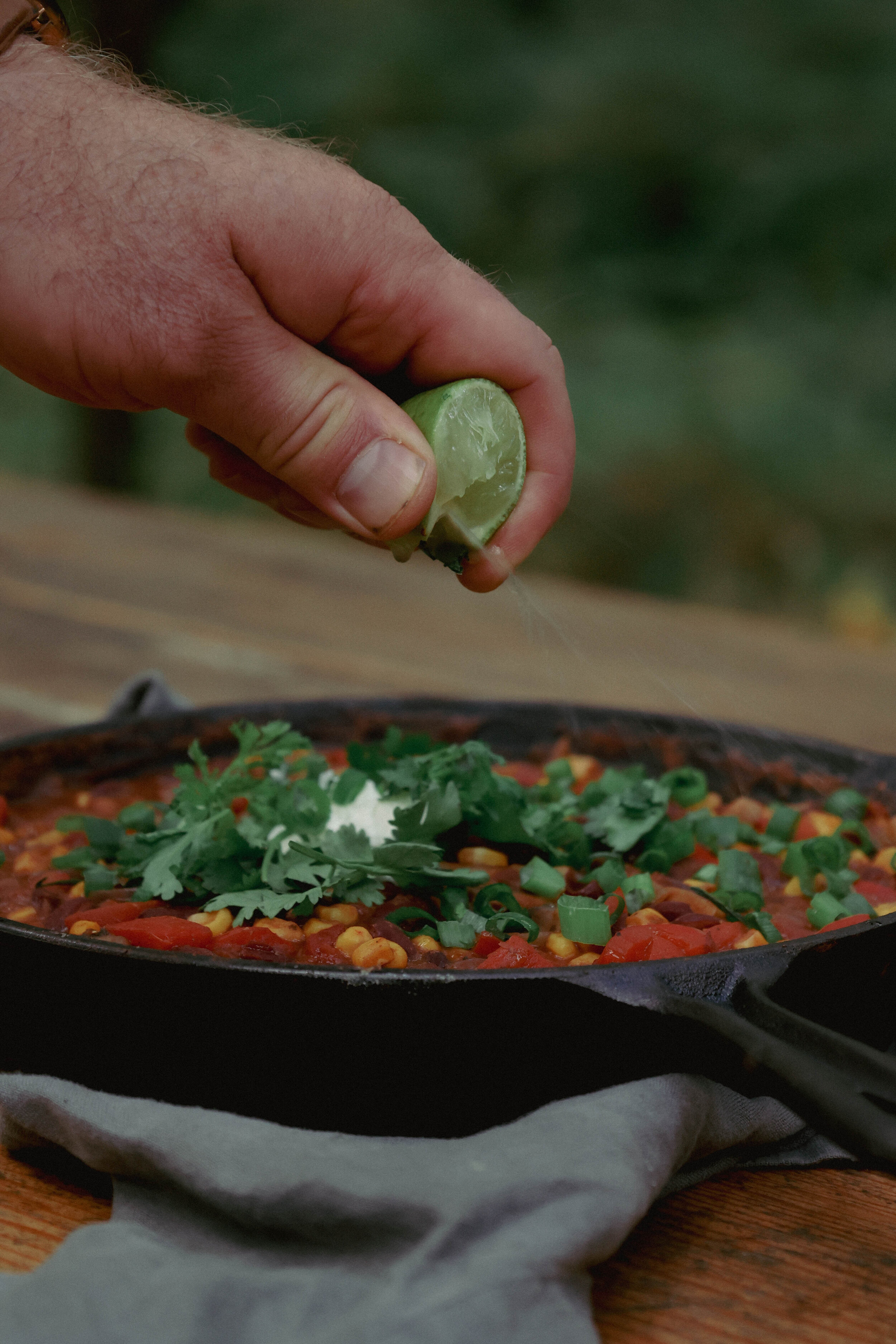
Chop up all veggies and sauté with cooking oil of your choosing. Add veggie broth and stir. At this point, you should turn up the heat and bring to a boil. Add your canned beans, corn and tomatoes. Bring it to a low heat, and add your spices. Let simmer for 20 minutes. Dish in separate bowls, and add a plop of sour cream, cilantro, green onion and lime juice as a garnish.
*Make sure to taste test during the process to add in any other ingredients your taste buds are missing.
Now sit back, relax, and enjoy! Worry about the dishes later…