
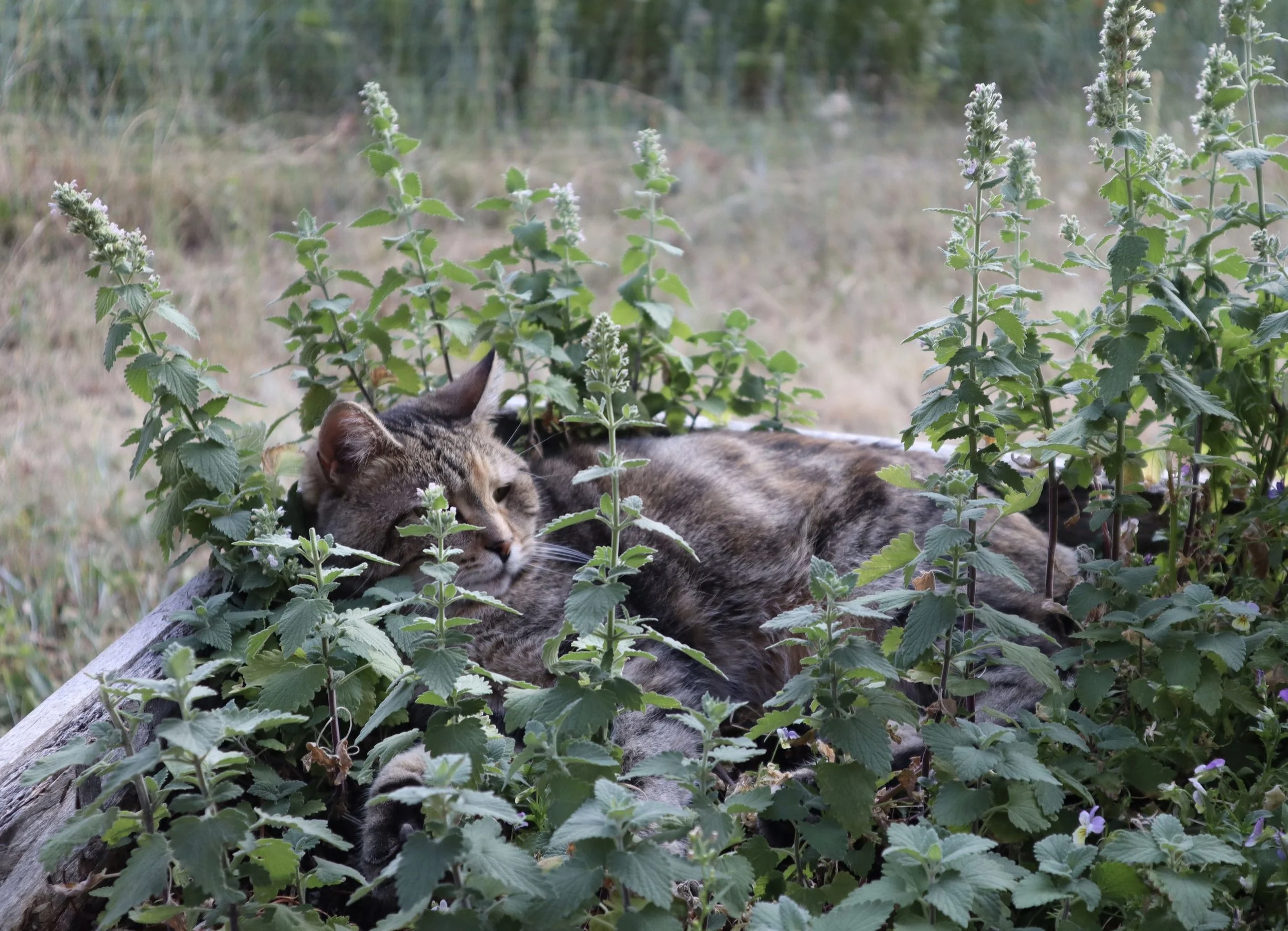
CATNIP
Nepeta cataria
CATNIP - Nepeta cataria
By: Angi Hronek
Other names: Grimmy’s Wort, Pimsweed, Catmint, Cat’s Wort or Catwort, Cat’s-Heal-All, Field Balm, Nip or Nep, Herbe aux chats
Family: Lamiaceae (Mint Family)
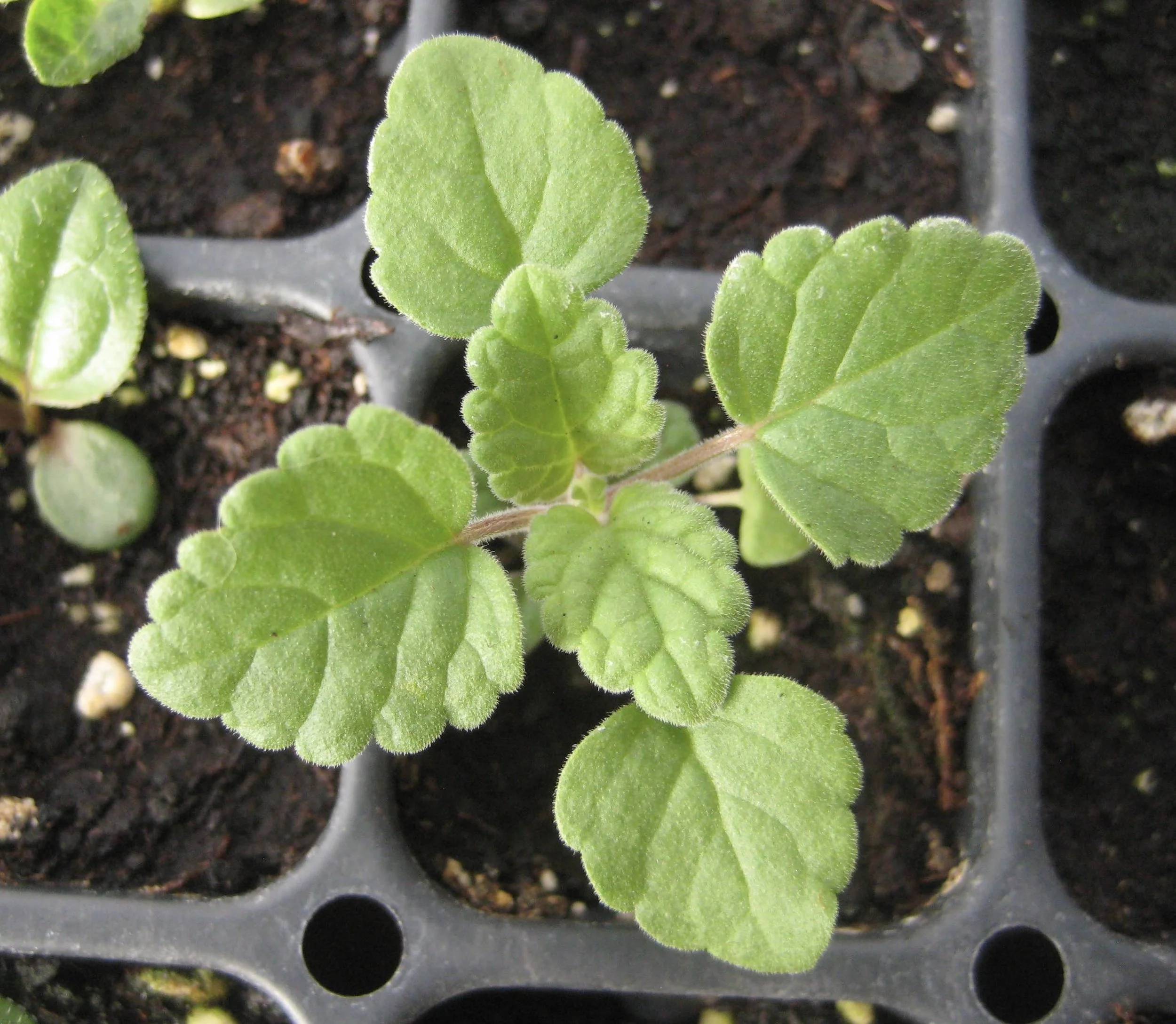
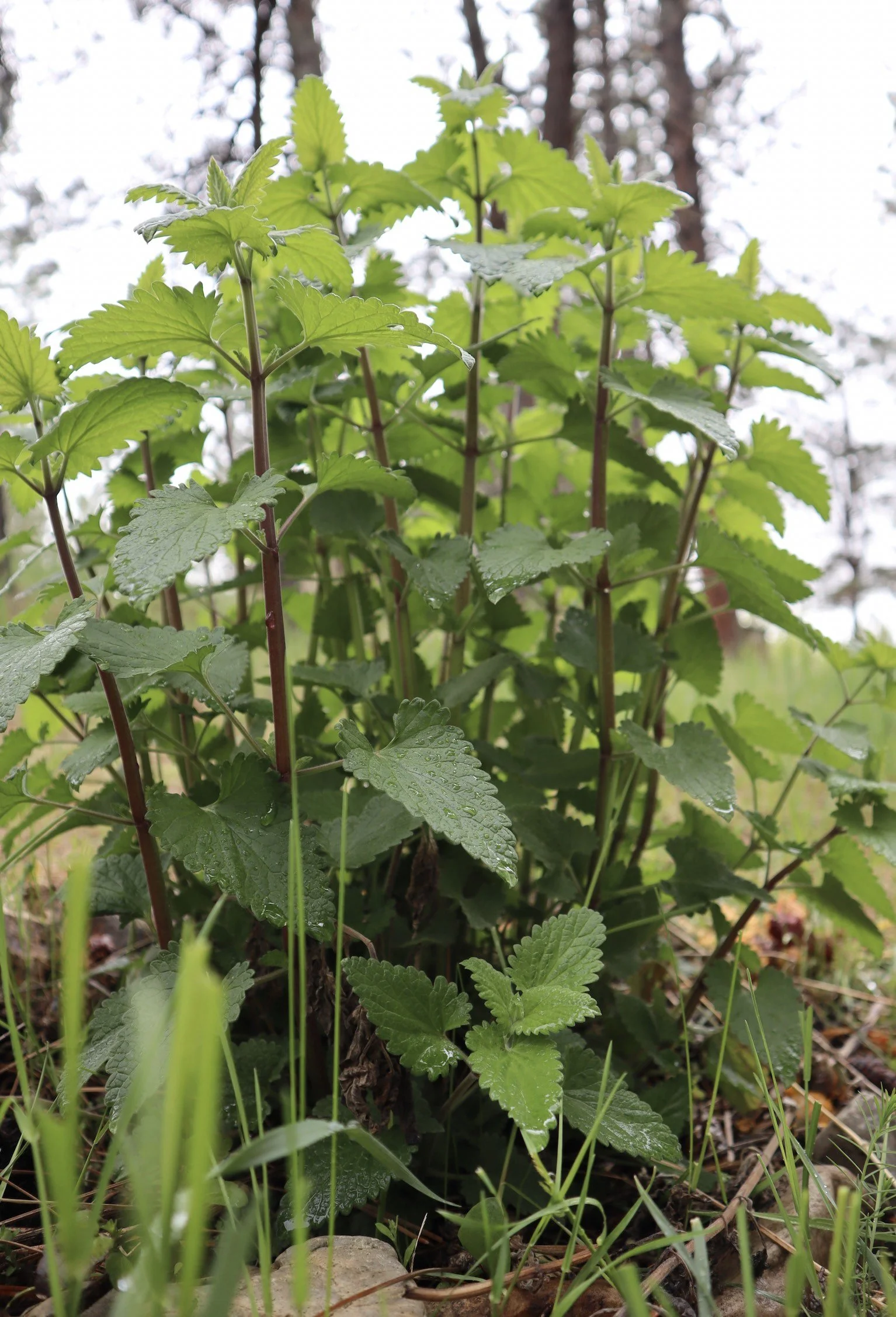
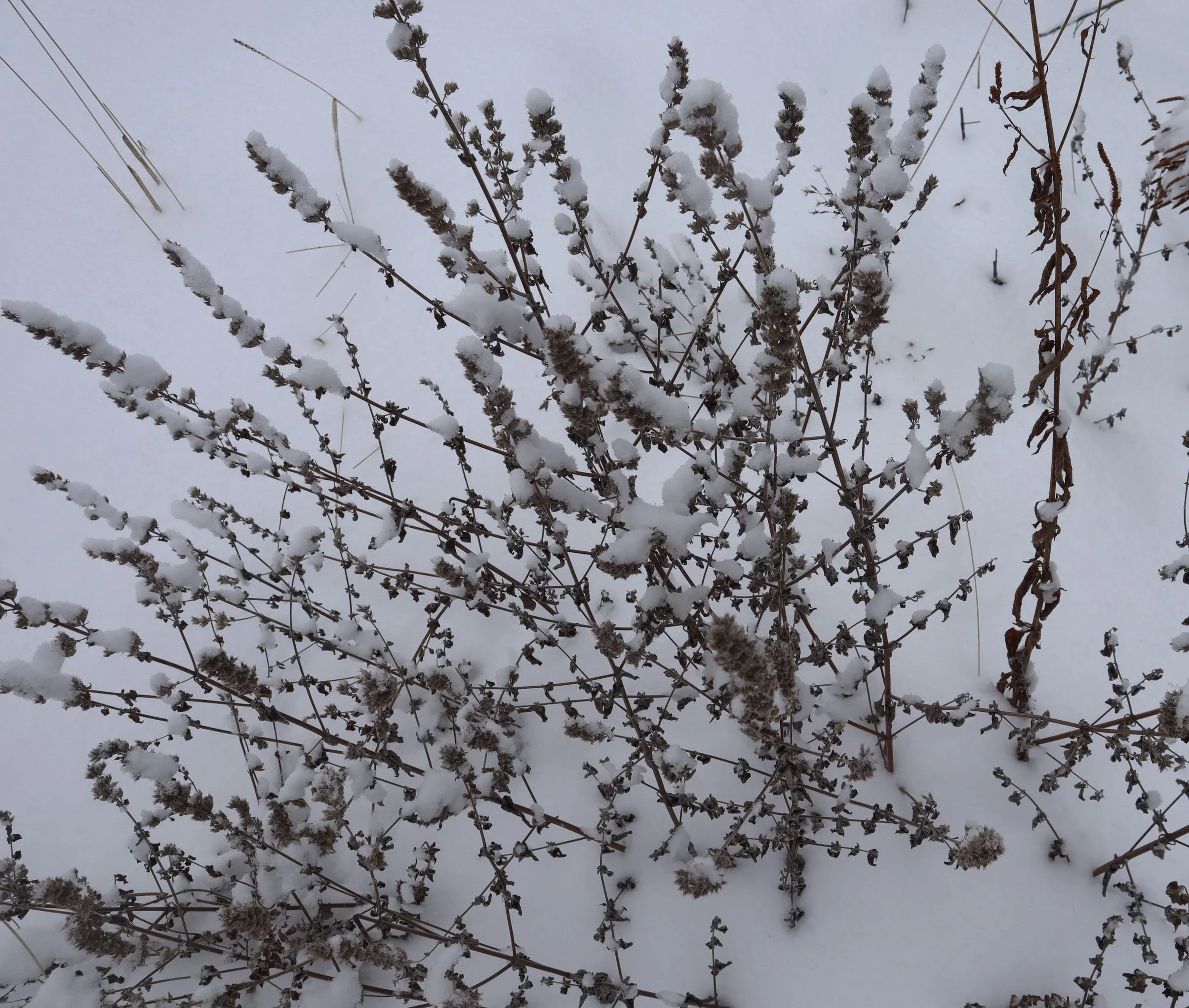
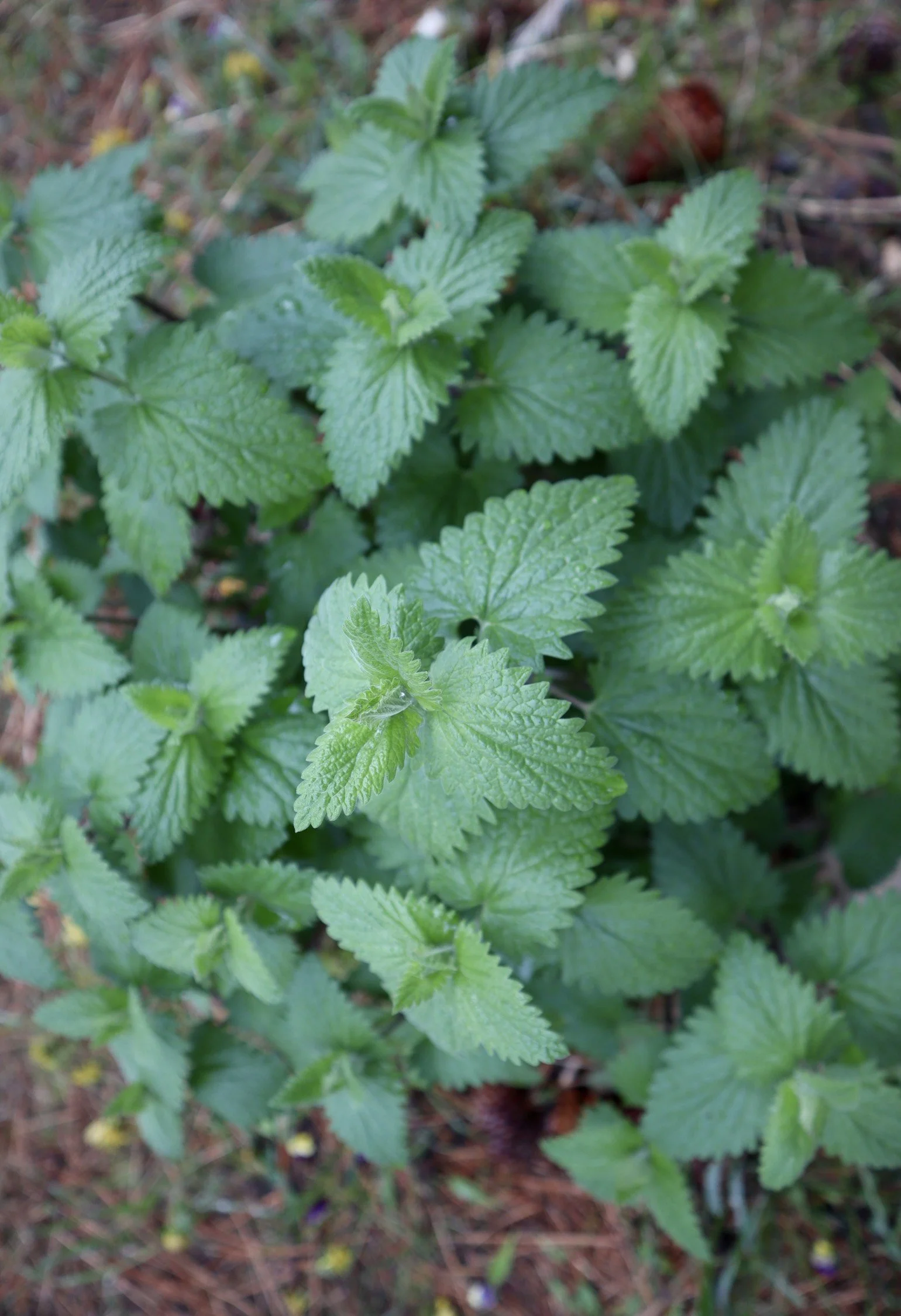
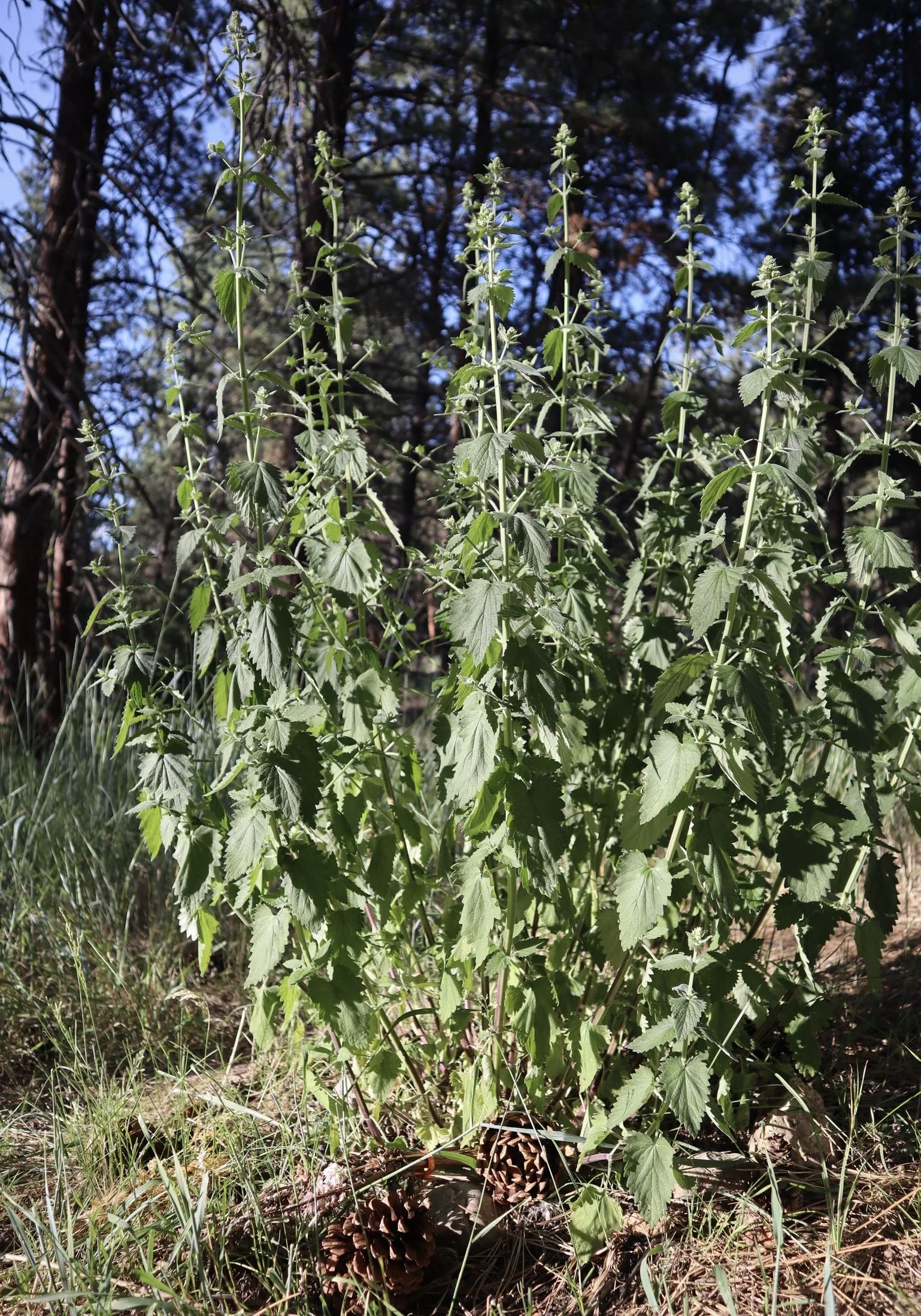
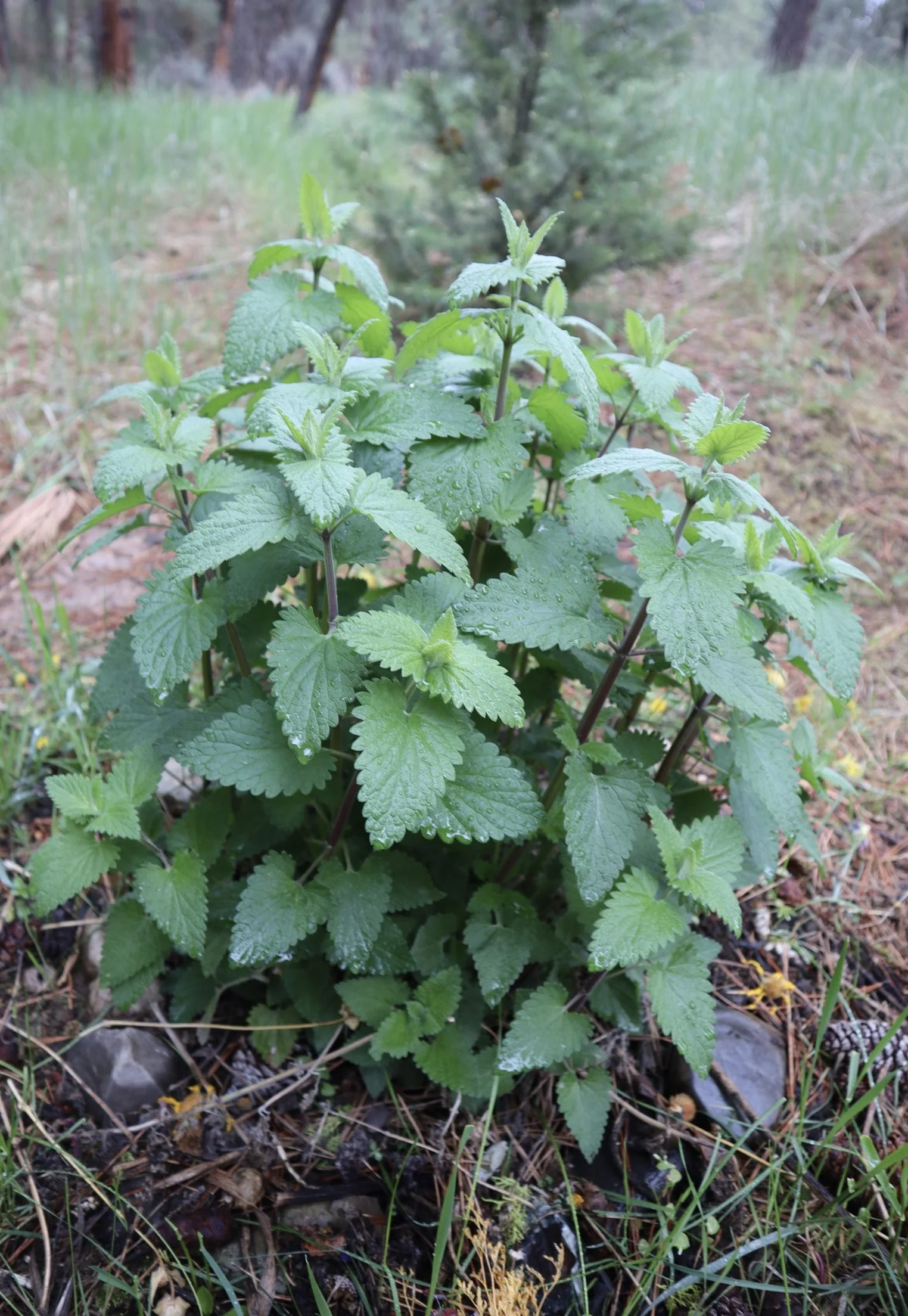
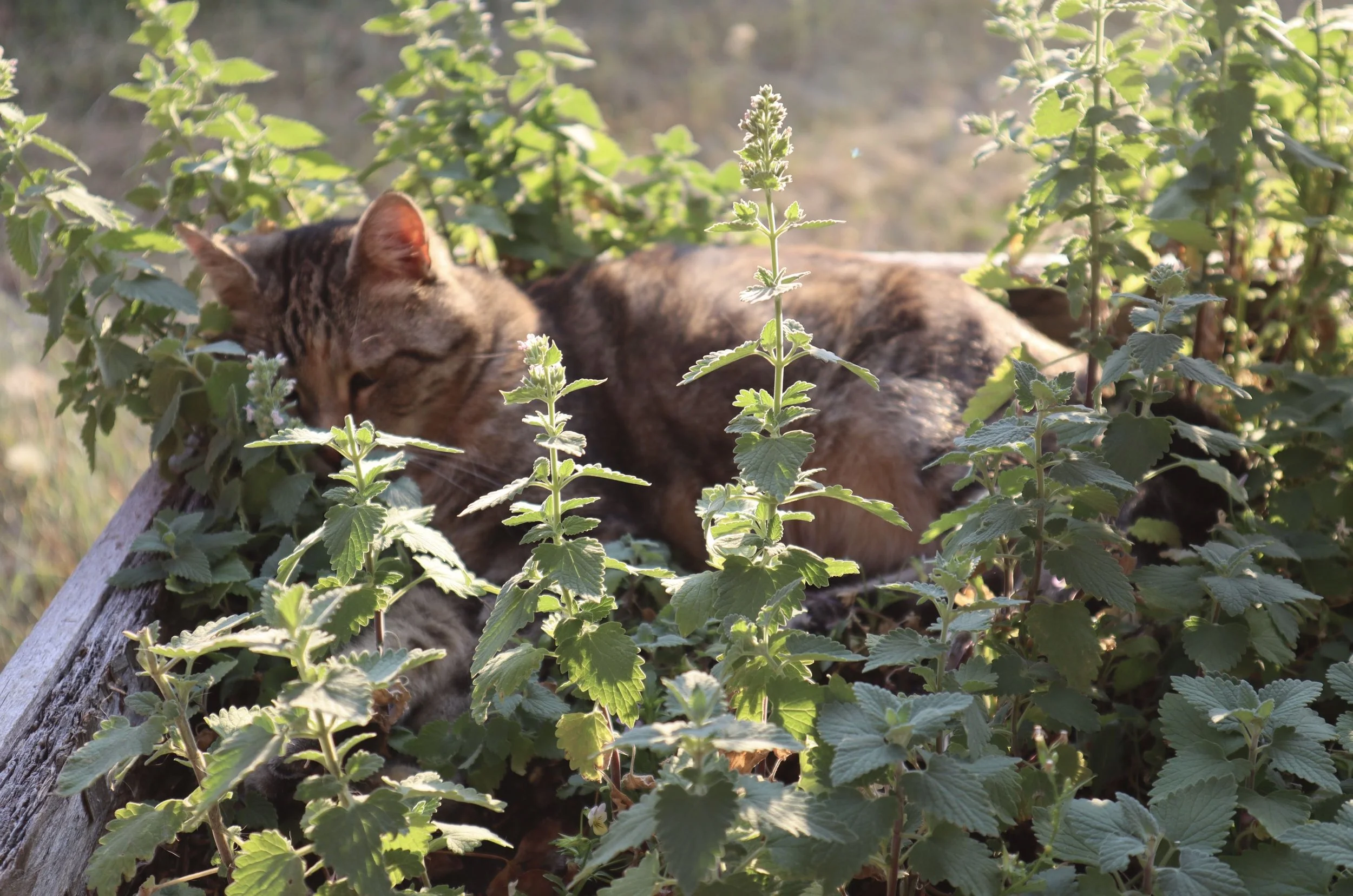
• Habitat/growing conditions: Perennial, likes full sun. It can be a bit tricky to germinate(seek advice from Strictly Medicinal Seeds). Once established, Catnip re-seeds and thrives. Grows wild in various spots throughout the west, especially near people. It can be found in riparian pockets, and likes disturbed areas. Grow it like you would any mint, although it doesn’t spread by runners like some mints. It can be pretty drought tolerant, but with enough water and space Catnip can get pretty huge (more like a medium sized shrub). It is native to Eurasia, now widespread in North America. Pollinators absolutely LOVE this plant, I have seen 20 different types of pollinators at once on a flowering Catnip
• Part Used: AGP- leaves, stems, and flowers (ideally before seeds begin to develop)
• Preparation/dosage: (Humans) Tincture- Fresh 1:2 95%, dry 1:5 50%, 2-4 mLs TID (3xday). Infusion- 1/4 to 2 tsp per cup of water TID. I personally make a much stronger tea, but starting small and working up is generally a good approach. I find Catnip to be a delicious ingredient in most teas and smoking blends.
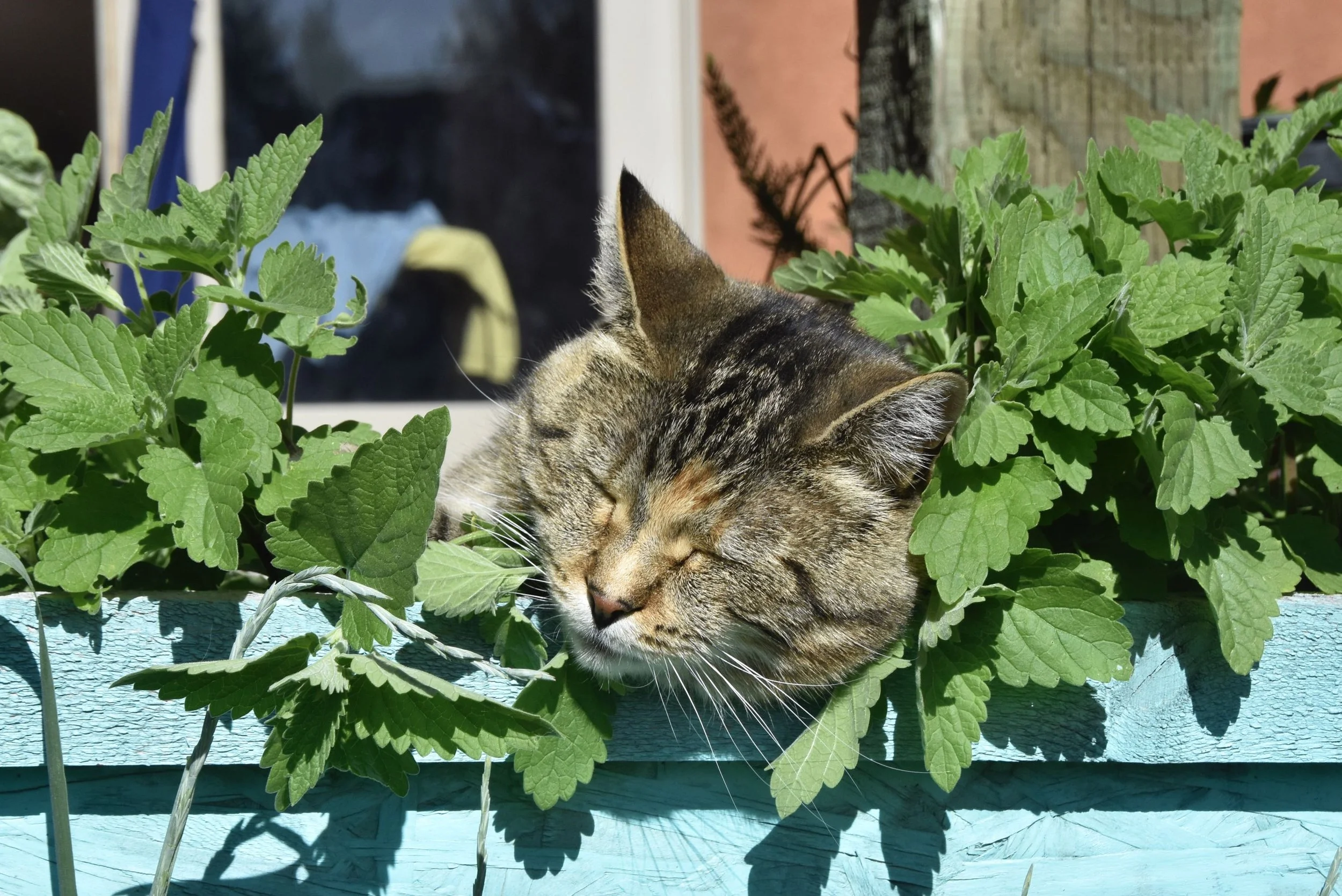
(Cats) 12-20 drops of glycerin based tincture for every 20 lbs. Can be useful 10-20 minutes before a stressful circumstance. Add 12 drops of tincture per 8oz water before travel. Offer up fresh/dried Catnip for cats and dogs to eat at their leisure, they can dose themselves.
• Energetics: Cooling, slightly drying
• Actions: carminative, anti-spasmodic, diaphoretic, sedative, astringent, nervine. Euphoric for felines. According to Culpepper, it’s an herb of Venus.
• Uses: Central nervous system- used as an anti-anxiety herb, especially with guarded anxiety. A mild but reliable tranquilizer and sedative. Use in formula for serious insomnia with other hard hitters. Great for calming kids. Used for colic via breastmilk (mother drinks a strong tea), or for teething. Used for many digestive purposes- nausea, cramps, vomiting.. and often used with Chamomile or Fennel for digestion. It also combines well with Fennel seed and Angelica root. Michael Moore says it can be used for menstrual cramps, but may increase menstrual flow to varying degrees. Catnip is a cold/flu remedy, specifically for fevers and especially with bronchitis. David Hoffman’s cold combo formula combines Catnip with Boneset, Elder, Yarrow and Cayenne. It is used for coughs and shortness of breath. Catnip is a great diaphoretic, and can be helpful with infant fevers with suppressed sweating. It can be helpful for hot head headaches. You can make a Catnip cordial with Rhubarb as an alkalizing elixir. Some people use it as an insect repellant.
It is very medicinal for cats, and is used as a remedy for the prevention and cure of diabetes. Most uses for humans overlap with cats or dogs. For cats/dogs- can be used for upset stomach, as a mild sedative, to calm the nerves, promote sleep, to unstring a high strung animal, and can be helpful for situations. Combine with Chamomile and Fennel as mentioned above for stomach issues with cats/dogs as well. Can mix with Ginger for motion sickness.
• Contraindications: Don’t use large amounts in pregnancy (Michael Moore specifically mentions “delicate” pregnancies), or cat pregnancy. Most agree Catnip has no contraindications.
• Lore: Thought to have come from the Etruruan city of Neptic- an ancient country in west-central Italy in the 7th century BC, but it’s origins are mysterious and unclear. There are theories that is was the ancient Egyptians that started cultivating it for their cats. There are records that ancient Greeks and Romans were aware of its effects on cats. In medieval Europe, Catnip was believed to possess mystical qualities. It has been used in witchcraft historically and continues to be used for it’s many magical qualities. I found this “fact” online, no idea if it has any basis in actual fact but I am including it because it’s entertaining-“Fun Fact: In 9 AD, Roman soldiers over-chewing catnip before battle led to a bizarre incident where some legionaries briefly acted cat-like, confusing Germanic attackers and inadvertently buying time for the Romans to regroup and win the skirmish.”(fuzzytumz.com)
• Sources:
-Juliet Blankespoor
-Rosemary Gladstar- Science and Art of Herbalism
-Medicinal Plants of the Mountain West, Michael Moore
-Culpeper’s Color Herbal
-Nature’s Children, Juliette de Bairacli Levy
-Complete Herbal Handbook for the Dog and Cat, Juliette de Bairacli Levy
-Herbs for Pets, Gregory L. Tilford & Mary L. Wulff
(Compiled by Angi Hronek of Piney Mountain Herbals)

Angi Hronek is the owner/operator of Piney Mountain Herbals and Blue Coyote farm in the Bitterroot Valley of Montana. Raised in Idaho, the conifer forests, and sagebrush deserts of central and southern Idaho formed her. Her formal herbal training started in North Carolina in 2013, she managed to squeak into the last year of the Chestnut School of Herbal Medicine’s in person plant immersion course with Juliet Blankespoor. During her time in North Carolina she was very lucky to study and walk with many amazing plant people and teachers, and has continued to be a student of the plants ever since. She is currently enrolled in Rosemary Gladstar’s Science and Art of Herbalism course and spends most of her time with her plants and animals at her farm and home in Montana.
Link to Catnip-inspired playlist: https://open.spotify.com/playlist/6BsSRheZGIqxP40rb3vlZv?si=-fLIEyCuSGecL0U3IoaqoQ